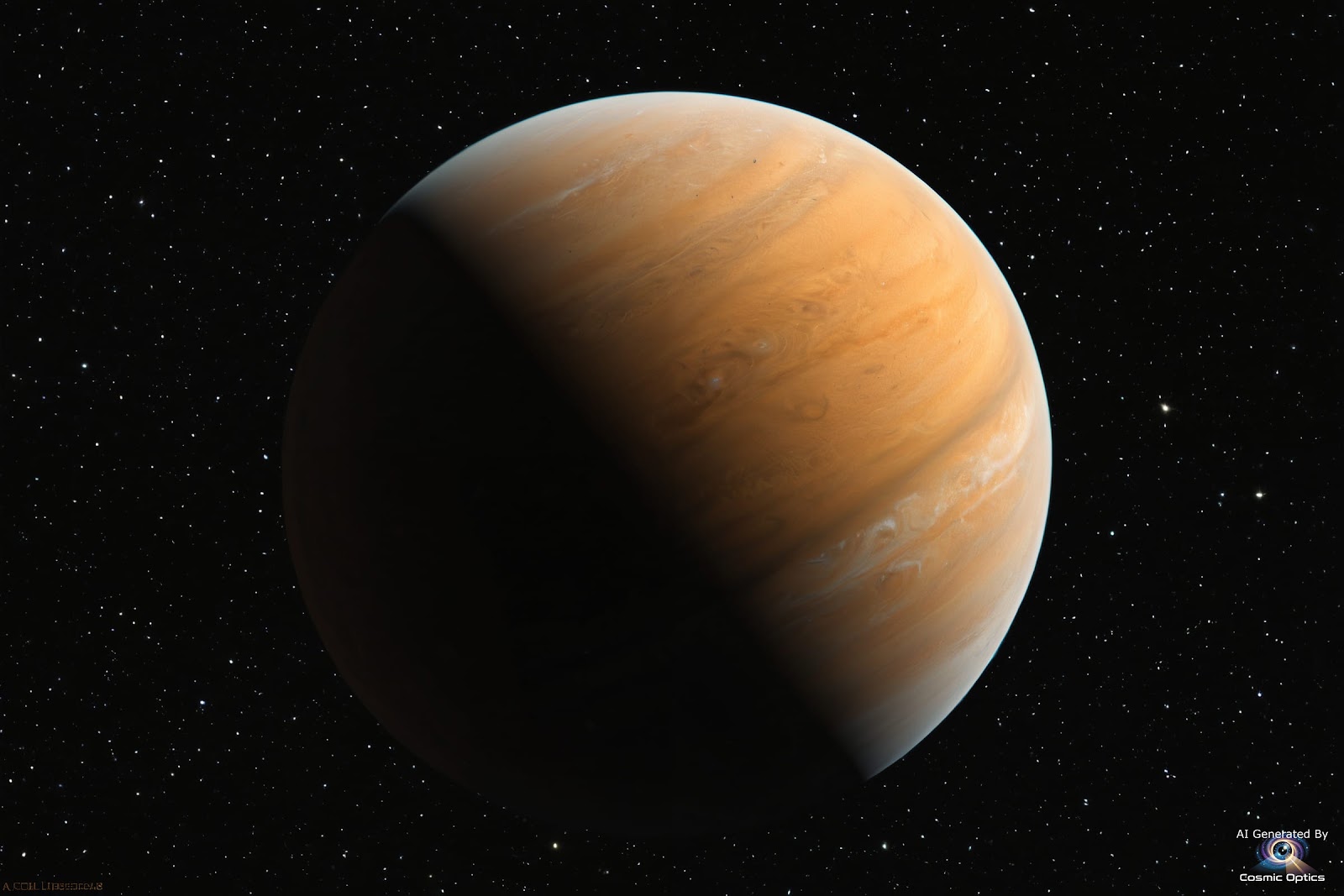
The Cosmic Cotton Candy: Exploring Nature’s Most Puffy Planets
When we think of planets, our minds usually drift toward the dense, rocky terrain of Earth or the colossal, crushing weight of gas giants like Jupiter. However, the universe has a flair for the whimsical, recently revealing a pair of worlds so low in density they make our own giants look like solid boulders. These "super-puff" planets challenge our fundamental understanding of planetary formation and atmospheric structure.

What Exactly Is a Super-Puff Planet?
In the realm of Science, the term "super-puff" refers to a rare class of exoplanets with remarkably low densities. While a standard gas giant is packed with heavy elements and compressed gases, these ethereal worlds are expanded, fluffy, and incredibly lightweight. Scientists have compared their physical density to something as mundane as shaving cream or cotton candy, which is quite a feat when you consider that these objects are roughly the size of Jupiter.
The Discovery of the Volans Duo
Located roughly 1,110 light-years away in the constellation Volans—the Flying Fish—this pair of planets orbits a Sun-like star known as TOI-791. Researchers identified these objects using data from space-based satellite transit monitoring, followed by rigorous ground-based observations to calculate their mass and radius. The findings are staggering:
- These planets are significantly less dense than any other objects of their size recorded to date.
- Their composition appears to be almost entirely composed of light elements like hydrogen and helium.
- They maintain a physical scale similar to Jupiter, yet possess only a fraction of its mass.

Why Are These Planets So Airy?

The formation of these fluffy giants is a subject of intense academic debate. Current models suggest these planets likely originated in a disk of gas and dust surrounding a newborn star. In these specific environments, the ratio of gas to solid material is heavily skewed. As the planet grows, it captures an immense amount of gas but struggles to consolidate it into a dense core. Over millions of years, the planet may lose some of this material, yet it retains a bloated, extended atmosphere that lacks the gravitational compression needed to "shrink" it into a solid ball.
The Aesthetic of an Airy World
While the term "cotton candy" might conjure images of bright pink hues, researchers clarify that these planets are far more subtle. Depending on the cloud cover and the chemical interaction of the hydrogen and helium layers, these worlds likely exhibit soft white or pale blue tones. These colors are dictated by the way light scatters through the vast, wispy layers of their upper atmospheres rather than any sugary pigmentation.

The Role of Next-Generation Observatories
The discovery of these two planets is only the beginning. Determining their exact chemical signatures requires the infrared capabilities of modern space telescopes. By analyzing the light filtering through their thin atmospheres during a transit, scientists can identify specific molecules. This will help confirm whether these "super-puffs" are purely gaseous or if they contain hidden icy cores that have yet to be detected.
Why This Research Matters
With nearly 6,300 confirmed exoplanets, finding a "super-puff" is akin to finding a needle in a haystack. There are fewer than 40 confirmed instances of such low-density worlds known to date. By studying these exotic systems, astronomers can better calibrate their models for how solar systems evolve. Every rare planet we discover helps fill in the gaps of our cosmic puzzle, offering a clearer picture of how diverse and unpredictable planetary formation truly is across our galaxy.