
Exploring the Enigmatic Super-Earth Groombridge 34 Ab in Our Local Stellar Neighborhood
The vast expanse of our galaxy is no longer a silent void of distant sparks; it has become a bustling neighborhood of diverse and enigmatic worlds. Among the most intriguing of these neighbors is the planetary system surrounding Groombridge 34, a binary star system located a mere 11.6 light-years from Earth. In the cosmic scale of things, this is practically our backyard. Within this system lies a fascinating world known to astronomers as Groombridge 34 Ab, a "Super-Earth" that challenges our understanding of planetary formation and the environments of red dwarf stars.
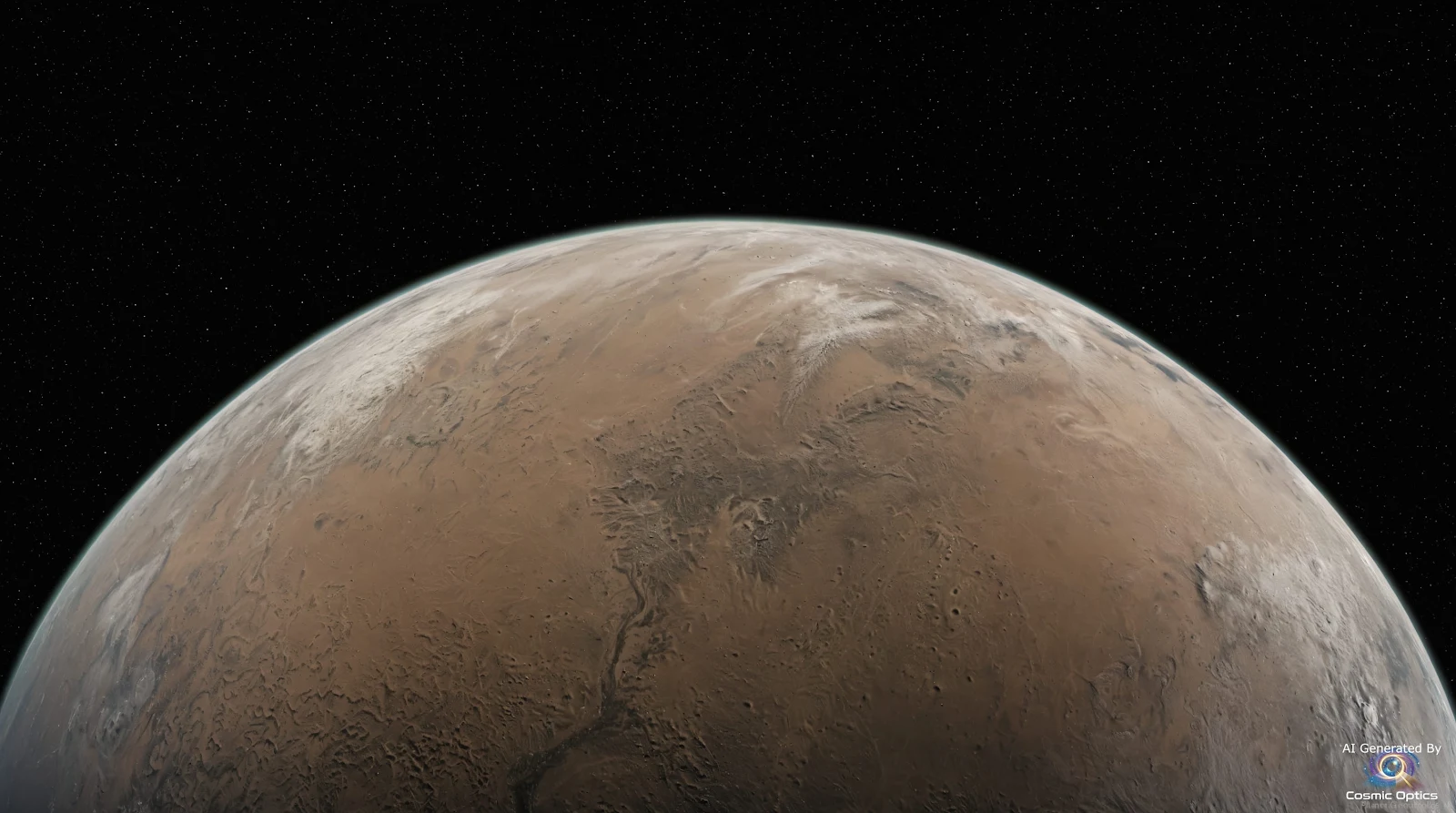
The discovery of Groombridge 34 Ab marks a significant milestone in our quest to map the nearby stars. This world orbits Groombridge 34 A, the larger and brighter component of the binary pair. Unlike our Sun, which is a yellow G-type main-sequence star, Groombridge 34 A is an M-dwarf, commonly known as a red dwarf. These stars are smaller, cooler, and much longer-lived than the Sun, but they are also notoriously temperamental, often emitting powerful flares that could strip the atmosphere of any planet huddled too close.
What makes this specific exoplanet so captivating is its classification as a Super-Earth. This is a category of planets that we do not have in our own solar system—worlds with a mass greater than Earth's but substantially less than the gas giants like Uranus or Neptune. Groombridge 34 Ab possesses roughly three times the mass of Earth, suggesting a rocky composition, though its exact density and surface conditions remain a subject of intense scientific modeling. Because it orbits its host star at a very close distance, completing a full "year" in just about 11.4 days, it experiences a constant bombardment of stellar radiation.
To imagine standing on the surface of such a world is to envision a landscape bathed in a deep, perpetual crimson glow. Because the planet is so close to its star, it is likely tidally locked. This means that one side of the planet permanently faces the star in eternal day, while the other side is shrouded in an endless, freezing night. The transition zone between these two extremes, often called the "terminator line," might be the only region where temperatures are somewhat moderate, though the sheer intensity of the red dwarf's flares would make any potential atmosphere a chaotic and violent place.
The detection of this world was an exercise in extreme precision. Astronomers utilized the radial velocity method, also known as Doppler spectroscopy. As the planet orbits, its gravitational pull causes the host star to "wobble" ever so slightly. By measuring the minute shifts in the star's light spectrum—moving toward the blue end as it wobbles toward us and toward the red end as it moves away—scientists can infer the presence of a planet, calculate its mass, and determine its orbital period. The fact that we can detect such subtle movements from 11.6 light-years away is a testament to the incredible advancement of modern astronomical instrumentation.
The Groombridge 34 system itself is a fascinating laboratory for binary star dynamics. The two stars, A and B, orbit each other at a significant distance, taking roughly 2,600 years to complete a single revolution. While Groombridge 34 Ab orbits the primary star, the secondary star—Groombridge 34 B—would appear as an incredibly bright point of light in the sky, far brighter than any planet appears in our own night sky, but not nearly as dominant as the primary red sun. This celestial dance creates a complex gravitational environment that influences how planets form and migrate within the system over billions of years.
Studying worlds like these is vital for our understanding of the "habitable zone" around red dwarfs. While Groombridge 34 Ab is likely too hot to host liquid water as we know it, its proximity makes it a prime candidate for future atmospheric characterization. With the advent of next-generation telescopes, such as the James Webb Space Telescope and upcoming ground-based Extremely Large Telescopes, we may soon be able to "sniff" the atmospheres of these nearby Super-Earths. We will look for signatures of carbon dioxide, water vapor, or even more exotic chemical compositions that could tell us if the planet has managed to hold onto an atmosphere despite the stellar wind.
The enthusiasm surrounding this system stems from the realization that red dwarfs are the most common stars in the Milky Way. If Super-Earths are a standard feature of these systems, then the galaxy is likely teeming with billions of rocky worlds. Each one represents a unique spin of the cosmic wheel, a different outcome of the chaotic process of planetary accretion. Groombridge 34 Ab serves as a sentinel, a nearby example that allows us to refine our models and prepare for the day we find a world that truly mirrors our own.
Ultimately, the story of this distant world is a story of perspective. It reminds us that our own solar system is just one variation of a grander theme. By studying the "wobbles" of distant red stars and the rocky giants that circle them, we are piecing together the history of the universe itself. We are learning that the conditions for planet formation are robust and that even in the harsh environments of flare stars, the universe finds a way to build complex, massive, and awe-inspiring worlds. As we continue to gaze out into the local stellar neighborhood, planets like Groombridge 34 Ab beckon us to keep searching, keep questioning, and keep marveling at the infinite variety of the cosmos.


