
Exploring the Massive Super-Earth Orbiting the Nearby Red Dwarf Star Groombridge 34 A
The vast expanse of our galaxy is home to an incredible variety of worlds, each more fascinating than the last, but few offer the same blend of proximity and scientific intrigue as the planets orbiting our nearest stellar neighbors. Among these local cosmic treasures lies the Groombridge 34 system, a pair of red dwarf stars located just over 11 light-years from Earth. In the context of the Milky Way, which spans over 100,000 light-years, this system is practically in our own backyard. Within this neighboring sanctuary, astronomers have identified a remarkable world known as Groombridge 34 A b, a super-Earth that challenges our understanding of planetary formation and the potential for diverse environments in the cosmos. The discovery and subsequent study of this planet represent a triumph of modern spectroscopy and a window into the most common type of planetary system in the universe.
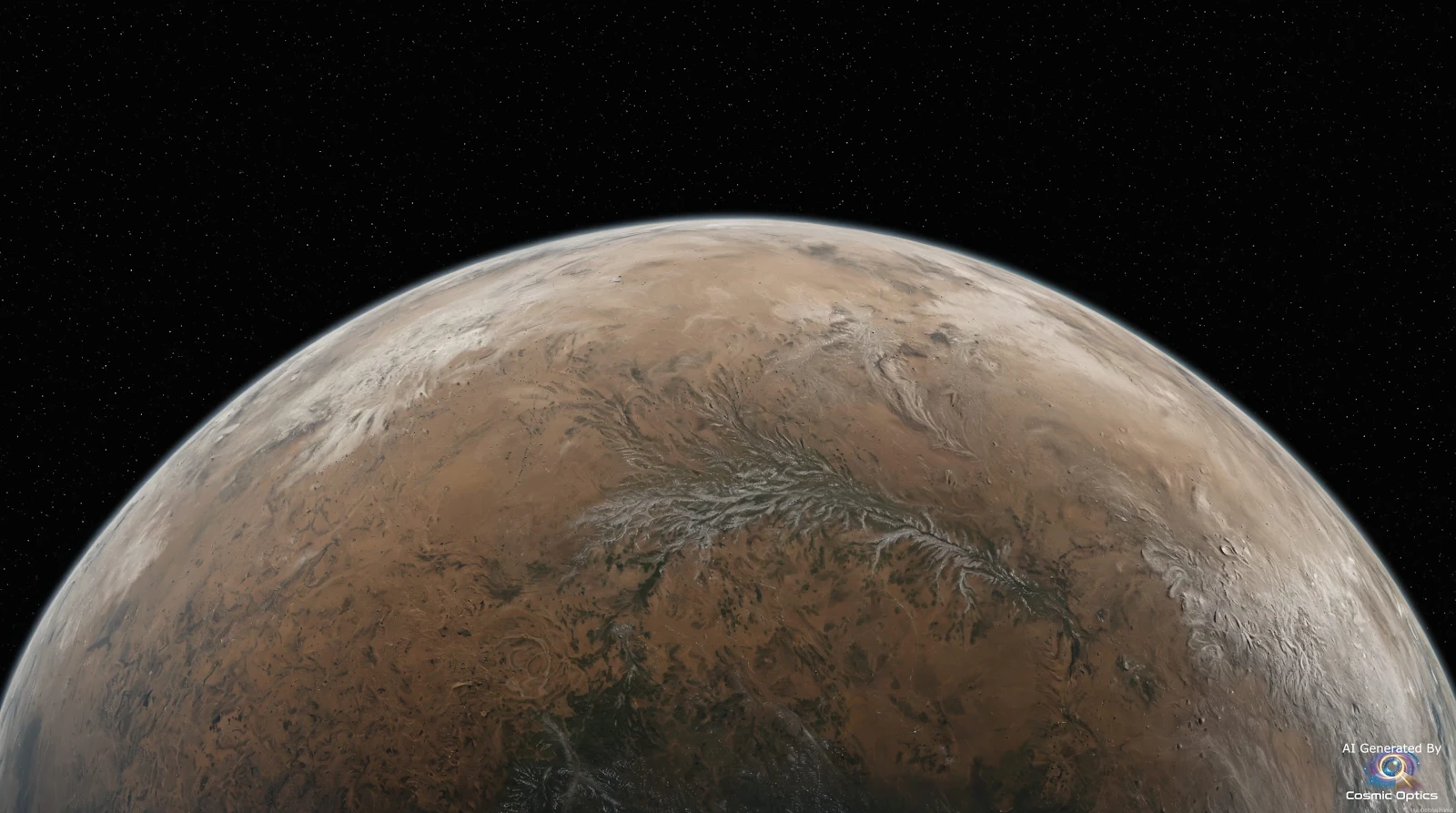
To understand the planet, one must first appreciate the unique nature of its parent star. Groombridge 34 A is a primary component of a binary system, also cataloged as Gliese 15 A. It is an M-dwarf, a category of stars that are smaller, cooler, and much longer-lived than our Sun. While our Sun is a yellow G-type star, Groombridge 34 A glows with a deep, steady crimson hue. Because red dwarfs like this make up approximately 75 percent of the stars in the Milky Way, studying the planets that circle them is essential for any comprehensive census of the galaxy. This star is relatively quiet for a red dwarf, lacking the frequent, violent flares often seen in younger M-class stars, which makes the environment around its orbiting planets significantly more stable than many of its peers.
The detection of the planet Groombridge 34 A b was a masterclass in precision. It was first identified using the radial velocity method, a technique that involves measuring the tiny "wobbles" of a star as it is tugged back and forth by the gravity of an orbiting planet. Because the star is so much more massive than the planet, these shifts are incredibly subtle—often measured in meters per second, the speed of a brisk human walk. Through the use of advanced instruments like the HIRES spectrograph at the Keck Observatory and the CARMENES instrument at the Calar Alto Observatory, researchers were able to confirm the presence of this world. The data revealed a planet with a minimum mass roughly three times that of Earth, placing it firmly in the "super-Earth" category—worlds that are more massive than our home but smaller than the ice giants like Uranus or Neptune.
Life on this planet would be unlike anything experienced in our solar system. Groombridge 34 A b orbits its star at an incredibly close distance of about 0.07 astronomical units, which is much closer than Mercury is to our Sun. Despite this proximity, the star is so much cooler than the Sun that the planet is not instantly vaporized. However, it still resides well inside the inner boundary of the habitable zone. This suggests a world where temperatures are likely high enough to prevent liquid water from existing on the surface in a traditional sense. The "year" on this planet is fleetingly short, with the world completing a full revolution around its crimson sun in just about 11.4 Earth days. For an observer on its surface, the parent star would appear massive in the sky, a giant red orb hanging perpetually over the horizon.
One of the most compelling aspects of such a close orbit is the likelihood of tidal locking. Over millions of years, the gravitational interaction between the star and the planet often causes the planet’s rotation to synchronize with its orbit. This means that one side of the planet would face the star in eternal daylight, while the other side remains shrouded in a permanent, frozen night. This creates a fascinating climate dynamic where heat from the dayside must be transported to the nightside via high-altitude winds, potentially creating a "twilight zone" or terminator line where temperatures might be more moderate. If the planet possesses a thick atmosphere, these atmospheric currents could be incredibly powerful, constantly churning the gases between the two hemispheres.
The composition of Groombridge 34 A b remains a subject of intense scientific speculation. Given its mass, it could be a rocky world with a thin atmosphere, or it could be a "mini-Neptune" with a thick envelope of hydrogen and helium. The density of the planet is a key piece of the puzzle that astronomers are eager to solve. If it is a rocky super-Earth, the gravity would be significantly higher than what we experience, making any potential geological features—such as mountains or volcanic ranges—vastly different in scale and behavior compared to those on Earth. The intense radiation from the nearby red dwarf, even if relatively stable, would interact with the upper atmosphere, potentially creating vibrant auroras that dance across the permanent nightside.
The Groombridge 34 system is not a solitary one; the primary star is accompanied by Groombridge 34 B, another red dwarf located at a considerable distance of about 147 astronomical units. From the perspective of the planet Groombridge 34 A b, this companion star would appear as a bright, piercing point of light in the sky, far brighter than any planet in our own night sky but not nearly as dominant as the primary sun. This binary arrangement adds another layer of complexity to the gravitational history of the system, influencing how the planetary disk formed and how the planet migrated to its current, close-in position over billions of years.
The importance of Groombridge 34 A b extends far beyond its own physical properties. As one of the closest known exoplanets, it serves as a primary laboratory for the next generation of astronomical tools. While we cannot currently see the planet directly, upcoming telescopes like the Extremely Large Telescope (ELT) and advancements in the James Webb Space Telescope’s (JWST) observational techniques may allow us to probe its atmosphere. By analyzing the light that filters through the planet’s atmospheric fringe, scientists can look for signatures of carbon dioxide, methane, or even more exotic molecules. Each piece of data brings us closer to understanding whether these super-Earths are barren rocks, steamy water-worlds, or something entirely alien to our experience.
There is a profound sense of wonder in knowing that such a massive and complex world exists just across the cosmic street. The study of Groombridge 34 A b reminds us that our solar system is just one of many possible configurations. The prevalence of super-Earths around red dwarfs suggests that the galaxy is teeming with worlds that are "almost" like ours, yet fundamentally different due to their stellar environment. As we continue to refine our search for life and habitable environments, these nearby red dwarf systems will remain at the forefront of our exploration, offering the best chance to eventually characterize an atmosphere on a world orbiting another star.
Ultimately, Groombridge 34 A b is a testament to human curiosity and the power of scientific advancement. A few decades ago, the existence of such a world was mere speculation. Today, we can calculate its mass, its orbit, and its temperature with increasing precision. It stands as a sentinel in the dark, a crimson-lit world that beckons us to keep looking upward. As our technology improves, the veil over this and other nearby planets will continue to lift, revealing the true diversity of the celestial tapestry and perhaps, one day, answering the fundamental question of our place among the stars.


