
Exploring Planetary Wonders and the Ancient Secrets of Asteroids in Our Dynamic Solar System
The vast expanse of our solar system is a realm of paradoxes, where the familiar laws of nature we experience on Earth are often turned upside down, revealing a universe far more vibrant and surprising than we once imagined. For centuries, humanity gazed at the stars as mere pinpricks of light, but through the lens of modern astrophysics and deep-space exploration, those points of light have transformed into complex worlds with their own unique geologies, atmospheres, and optical wonders. The deeper we venture into the void, the more we realize that our terrestrial perspective is just one of many possible realities in a diverse and dynamic cosmos.
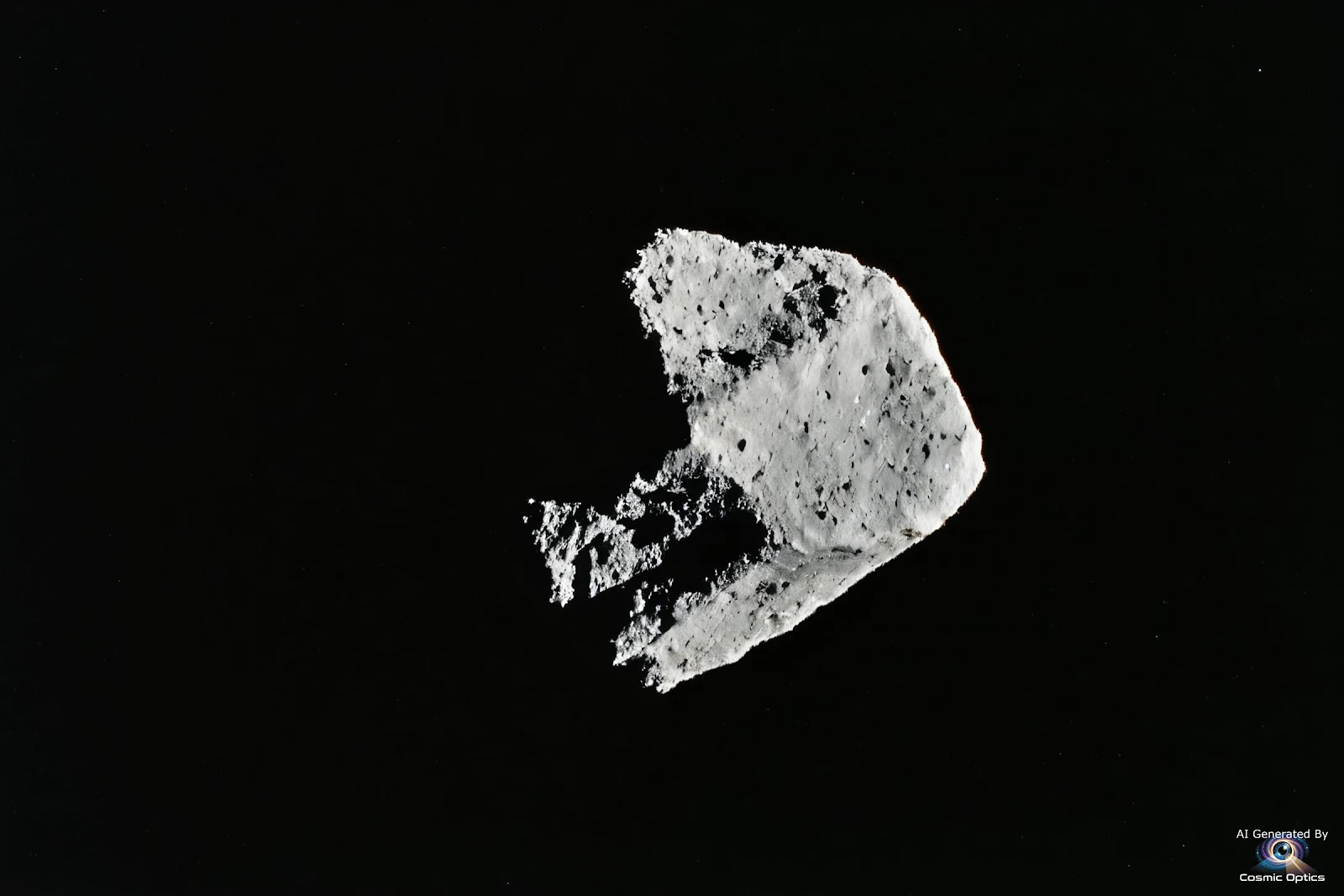
An authentic, true-color NASA photograph of a photograph of a rocky asteroid rotating in the dark vo_00003
One of the most captivating examples of this cosmic variance is found in the way light interacts with the environments of other planets. On Earth, we are accustomed to a sky that blushes crimson and gold as the sun dips below the horizon. This occurs because our thick atmosphere, rich in nitrogen and oxygen, scatters shorter blue wavelengths of light in all directions, leaving the longer red wavelengths to dominate the view at sunset. However, on the dusty plains of Mars, this process is dramatically inverted. The Martian atmosphere is thin and perpetually filled with fine silicate dust. These particles are just the right size to scatter red light more effectively than blue light. Consequently, while the daytime sky on Mars carries a butterscotch or pale pink hue, the area around the setting sun glows with a haunting, ethereal blue. It is a striking reminder that beauty in the universe is often a matter of physics and perspective.
Beyond the atmospheric dances of the planets lie the silent, ancient wanderers of our solar system: asteroids. These rocky remnants from the dawn of our celestial neighborhood, roughly 4.6 billion years ago, serve as pristine time capsules. Studying these objects is not merely an exercise in cataloging space debris; it is an investigation into our own origins. Most asteroids reside in the vast belt between Mars and Jupiter, but their compositions vary wildly, telling different stories of the early solar nebula. Some are carbon-rich "C-type" asteroids, dark as coal and containing organic molecules and water-bearing minerals. Others are "S-type," stony and composed of silicate materials and nickel-iron. The rarest are the "M-type," which are almost entirely metallic, perhaps representing the shattered cores of proto-planets that never quite made it to maturity.
The movement of these celestial bodies is a masterclass in orbital mechanics. While they may appear to drift aimlessly, they are locked in a complex gravitational ballet with the sun and the larger planets. The influence of Jupiter, in particular, acts as a cosmic shepherd, using its immense gravity to clear gaps in the asteroid belt or occasionally nudge a rocky traveler onto a trajectory that brings it into the inner solar system. When these objects pass close to Earth, they become Near-Earth Objects (NEOs), providing scientists with a rare opportunity to study the building blocks of planets up close. Missions like NASA’s OSIRIS-REx and JAXA’s Hayabusa2 have pushed the boundaries of human ingenuity by not only visiting these rotating fragments of history but also successfully bringing physical samples back to Earth for laboratory analysis.
The physical appearance of an asteroid is often a testament to a violent history. Unlike planets, which are large enough for gravity to pull them into spheres, most asteroids are irregularly shaped, resembling jagged potatoes or "rubble piles." These rubble piles are not solid rocks but rather loose collections of debris held together by their own extremely weak gravity. This structure makes them fascinating subjects for study; a spacecraft landing on such an object wouldn't find a solid surface, but rather a precarious landscape where every movement could shift the ground beneath it. The craters that pockmark their surfaces are scars from billions of years of collisions, documenting the chaotic era when the solar system was still finding its equilibrium.
The study of light and shadow on these airless bodies also provides critical data for astronomers. Because they lack atmospheres to diffuse light, the contrast on an asteroid is absolute. One side may be baked by the sun’s unshielded radiation, while the other remains in a frigid, pitch-black shadow. This extreme environment causes a phenomenon known as thermal "weathering," where the constant expansion and contraction of minerals eventually crumble the rock into a fine powder called regolith. By analyzing how these objects reflect light—a metric known as albedo—scientists can determine their composition from millions of miles away. A low albedo indicates a dark, carbonaceous surface, while a high albedo suggests a brighter, metallic or silicate-rich exterior.
As we look toward the future of space exploration, these small worlds represent more than just scientific curiosities. They are potential stepping stones for humanity’s journey into the deep cosmos. The minerals and water ice trapped within asteroids could one day provide the resources necessary for deep-space refueling stations or off-world manufacturing. The idea of "asteroid mining" is transitioning from the realm of science fiction into a serious field of economic and technological research. By harvesting the raw materials of the solar system, we can reduce our reliance on Earth’s finite resources and build a sustainable presence in space.
Every discovery we make, whether it is the blue glow of a Martian evening or the intricate rotation of a distant asteroid, expands our definition of "home." We are residents of a solar system that is far more interconnected than it appears. The dust that turns a Martian sunset blue and the rocks that drift through the dark void are all part of a single, grand narrative of cosmic evolution. By observing these phenomena with enthusiasm and scientific rigor, we continue to bridge the gap between our small planet and the infinite wonders that lie just beyond our reach. The universe is not just a place to be observed; it is a frontier to be understood, cherished, and eventually, explored firsthand.
The thrill of modern astronomy lies in this very realization: that the "void" is not empty at all, but filled with treasures waiting to be uncovered. Each mission, each photograph, and each calculated orbit brings us closer to answering the most fundamental questions of our existence. As we continue to gaze upward, we do so with the knowledge that the most spectacular sights in the universe are often those we have yet to see, hidden in the shadows of rotating stones or the colorful atmospheres of distant worlds. The journey of discovery is far from over; in many ways, we are only just beginning to open our eyes to the true majesty of the cosmic stage.


