
The Blistering Extremes of KELT-9b and Its Atmosphere of Vaporized Metallic Gases
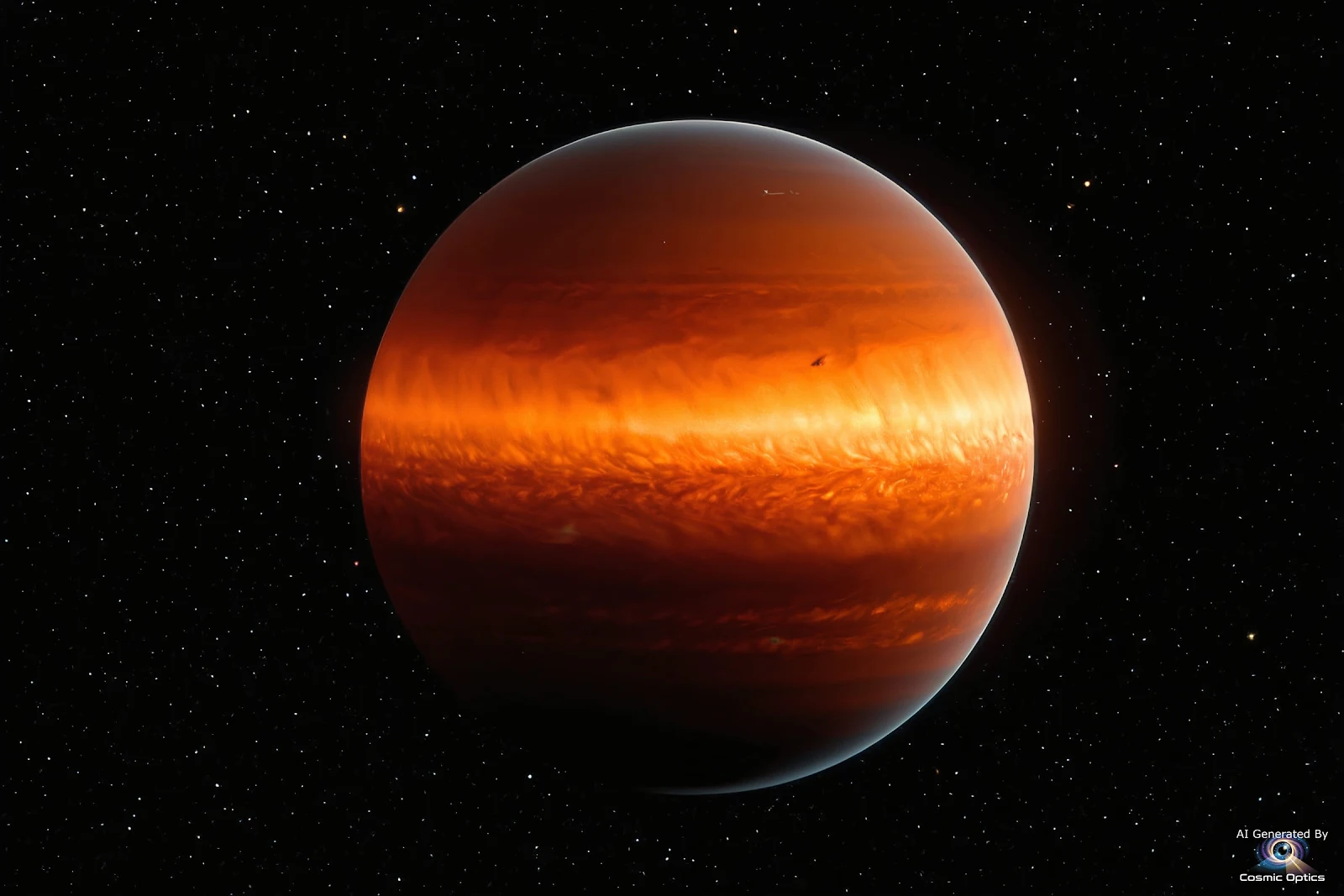
Located approximately 670 light-years away in the constellation Cygnus, the exoplanet KELT-9b represents the most extreme environment ever witnessed in a planetary body. It orbits a massive, blue A-type star that is nearly twice as hot as our own Sun. Because the planet is situated so close to its parent star—completing a full "year" in just 1.5 Earth days—it is bombarded by an intensity of ultraviolet radiation that is difficult to comprehend. This proximity results in a dayside temperature that soars to roughly 4,600 Kelvin (about 7,800 degrees Fahrenheit). To put that into perspective, KELT-9b is hotter than the surface of most stars in our galaxy, including many M-dwarf "red" stars.
What happens to matter at such temperatures is fascinating from a chemical and physical standpoint. On a typical gas giant like Jupiter or Saturn, the atmosphere is composed of complex molecules like water vapor, methane, and carbon dioxide. However, on KELT-9b, the heat is so intense that these molecules cannot exist. The thermal energy is so high that it literally tears molecules apart into their constituent atoms through a process known as thermal dissociation. Instead of clouds of water or ammonia, the atmosphere of this world is a searing plasma of atomic hydrogen and helium. Recent spectroscopic observations have even revealed the presence of vaporized heavy metals, including neutral and ionized iron and titanium, drifting through the upper atmosphere as a thin, metallic gas.
This atmospheric composition creates a spectacular visual and physical phenomenon. On the dayside of the planet, the atoms are dissociated, but as they circulate toward the nightside—which is slightly cooler, though still intensely hot—they may recombine into molecules before being swept back into the furnace of the dayside. This creates a perpetual cycle of molecular destruction and rebirth, a global-scale chemical reaction driven by the overwhelming power of the host star. The planet is tidally locked, meaning one side always faces the star in a state of eternal day, while the other faces the cold void of space, creating a massive temperature gradient that drives winds at supersonic speeds across the planetary terminator.
The host star itself, KELT-9, plays a crucial role in the evolution—and eventual demise—of this world. Because the star is so hot and luminous, it emits a ferocious amount of high-energy radiation. This radiation acts as a "stellar wind" that is actively stripping away the planet’s atmosphere. KELT-9b is essentially evaporating. Scientists estimate that the planet is losing massive amounts of mass every second, creating a glowing tail of gas that trails behind it, much like a comet. This makes KELT-9b a "transient" object in astronomical terms; eventually, it may be reduced to its rocky core, or it might be completely consumed by the relentless energy of its sun.
Studying such an outlier provides invaluable data for the field of comparative planetology. By understanding the most extreme cases, astronomers can better refine the models used to describe more temperate worlds. The discovery of heavy metals in the gas phase was a milestone in exoplanet research, as it confirmed that planets can possess atmospheres that behave more like the outer layers of stars than the atmospheres of the gas giants in our own solar system. It challenges the "standard model" of planetary formation and suggests that the migration of gas giants toward their parent stars can lead to chemical environments we are only beginning to understand.
The technology required to observe these details is as impressive as the planet itself. Using high-resolution spectrographs like HARPS-N and the CARMENES instrument, researchers can look for the "fingerprints" of specific elements in the light that passes through the planet's atmosphere during a transit. When the planet moves in front of its star, a tiny fraction of the starlight is absorbed by the gases surrounding the planet. By analyzing which specific wavelengths are missing, scientists can deduce the presence of iron, titanium, and even rare-earth elements. This is the ultimate "forensic" science, conducted across trillions of miles of vacuum.
Looking forward, the era of the James Webb Space Telescope (JWST) and the upcoming Ariel mission promises to peel back even more layers of these exotic worlds. We are moving from a period of merely discovering exoplanets to a period of detailed atmospheric characterization. We are no longer just asking "Is there a planet there?" but rather "What is that planet made of, and how does it interact with its environment?" KELT-9b remains the gold standard for these investigations, a laboratory of high-energy physics that provides a glimpse into the raw, transformative power of the cosmos.
Ultimately, the story of such ultra-hot gas giants is a reminder of how unique our own solar system is, while simultaneously highlighting how much remains to be discovered. While we often search the stars for "Earth-like" worlds in hopes of finding life, it is the "un-Earth-like" worlds that often teach us the most about the fundamental nature of matter and energy. KELT-9b is a world of fire and metal, a place where the atmosphere is a metallic mist and the sky is a furnace, standing as a brilliant beacon in our ongoing quest to map the diversity of the universe.


