
The Crimson Frontier Exploring the Ancient Mysteries and Future Potential of the Red Planet
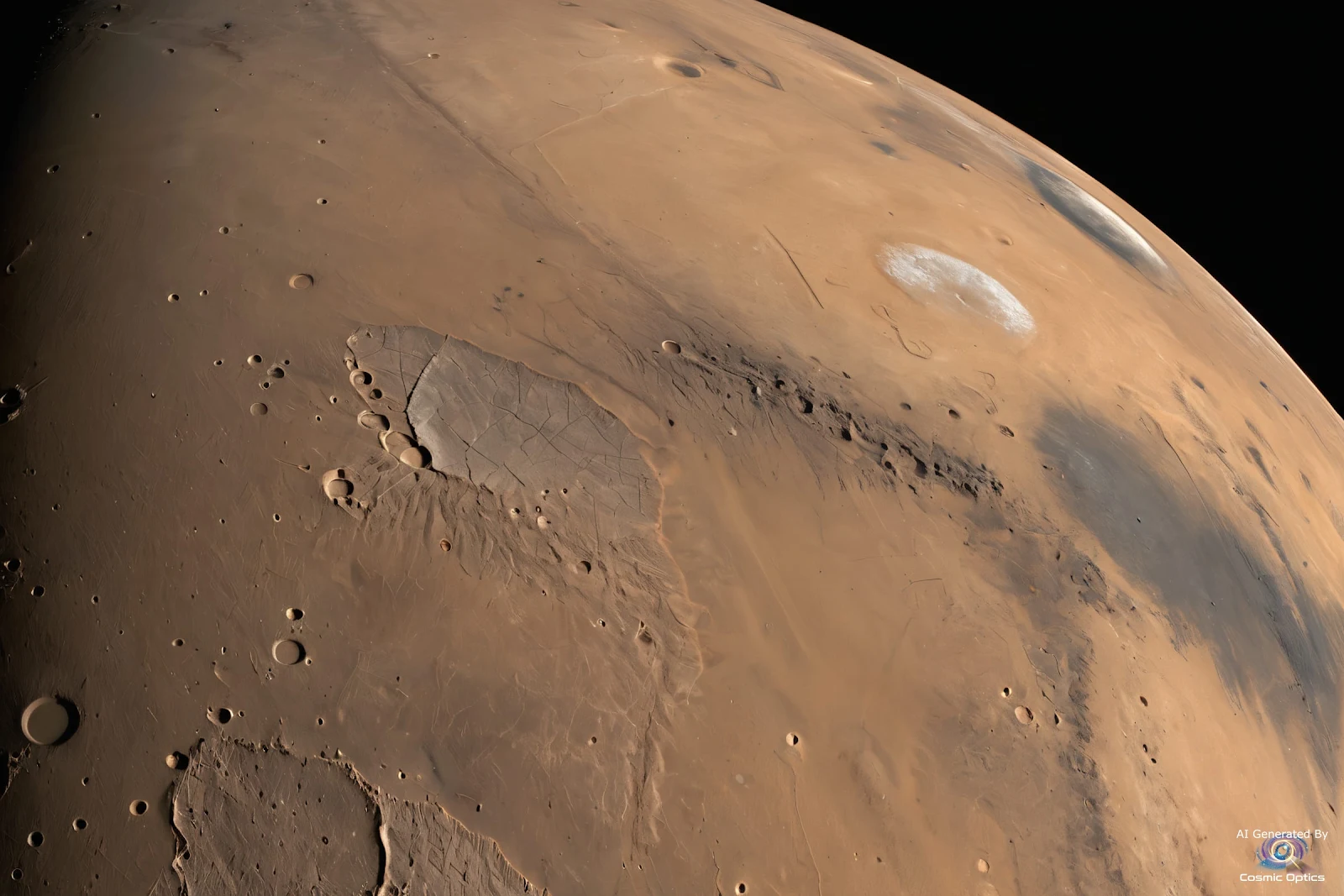
The allure of the fourth planet from the sun has captivated human imagination since the first stargazers traced its ruddy path across the night sky. Mars, a world of rust-colored dust and silent, sweeping vistas, stands as the ultimate frontier for modern exploration. It is a planet of superlatives, home to the largest volcano and the deepest canyon in the solar system, offering a geological record that stretches back billions of years. To look upon Mars is to look into a mirror of Earth’s possible past—or perhaps its distant future. Its crimson hue, a result of iron oxide or rust permeating the regolith, tells a story of a world that was once dynamic, wet, and potentially habitable, making it the primary focus of our search for life beyond our own blue marble.
Understanding the Martian landscape requires an appreciation for the sheer scale of its features. While Earth is a vibrant world of oceans and plate tectonics, Mars is a world where the internal heat died down long ago, allowing geological features to grow to gargantuan proportions. Consider Olympus Mons, a shield volcano that towers nearly three times the height of Mount Everest. Because Mars lacks the shifting plates found on Earth, a volcanic hotspot can remain stationary under the crust for millions of years, piling layer upon layer of lava until it pierces the thin atmosphere. Surrounding this giant is a complex of other volcanic peaks and lava plains that hint at a violent, fire-filled youth for the Red Planet.
Complementing these heights is the Valles Marineris, a canyon system that dwarfs the Grand Canyon of Arizona. Stretching over 4,000 kilometers—long enough to span the entire United States—this "Grand Canyon of Mars" reaches depths of up to seven kilometers. It is not a product of water erosion alone but a tectonic crack in the planet's crust, likely formed as the nearby Tharsis volcanic region bulged and pulled the surface apart. These features are not merely scenic; they are essential clues to the thermal evolution of the planet, providing scientists with a vertical timeline of Martian history etched into the rock walls.
The atmosphere of Mars is a ghost of its former self. Composed of 95% carbon dioxide, it is incredibly thin, with a surface pressure less than 1% of Earth's. This thin veil creates a world of extreme temperature fluctuations and fierce dust storms that can occasionally envelop the entire planet for months. Despite its fragility, the atmosphere is active. It supports clouds of water ice and carbon dioxide ice, and it facilitates a seasonal cycle where the polar caps grow and shrink as CO2 freezes out of the air and then sublimates back into gas. This thin atmosphere is one of the greatest challenges for exploration, as it is too thin to provide significant lift for traditional aircraft but thick enough to generate intense friction and heat for descending spacecraft.
Perhaps the most profound question we ask of Mars is: "Where did the water go?" Modern orbiters and rovers have provided overwhelming evidence that Mars was once a world of liquid water. We see ancient river valleys, delta deposits, and minerals like hematite and clays that only form in the presence of water. Billions of years ago, Mars may have possessed a thicker atmosphere and a magnetic field that shielded it from solar winds, allowing lakes and perhaps even a northern ocean to persist. Today, that water exists primarily as ice locked in the polar caps or buried beneath the freezing Martian soil. The discovery of recurring slope lineae—dark streaks that appear on crater walls during warm seasons—suggests that briny liquid water might still occasionally flow on the surface, though the environment remains incredibly hostile to life as we know it.
The quest for biological signatures is the driving force behind missions like the Perseverance rover and the Curiosity laboratory. By drilling into the sedimentary rocks of Jezero Crater, scientists are looking for organic molecules and isotopic ratios that might indicate ancient microbial life. The Martian environment, while barren today, was once remarkably similar to early Earth. If life arose on our planet during its first billion years, there is no fundamental reason it could not have emerged on Mars during the same era. Finding even a fossilized microbe would fundamentally alter our understanding of biology, suggesting that life is a common occurrence in the universe rather than a terrestrial fluke.
Beyond the scientific data, Mars holds a unique psychological and cultural place in our journey as a species. It represents the next logical step in the human odyssey. Every rover track and every high-resolution photograph brings us closer to the day when human boots will finally touch the red dust. The logistics are daunting—six to nine months of travel through deep space, the need for radiation shielding, and the requirement to manufacture oxygen and fuel from the Martian atmosphere. Yet, the drive to explore is relentless. Mars offers the potential for a "second home," a backup for humanity, and a laboratory for technologies that could one day take us to the moons of Jupiter and beyond.
As we continue to peer through our telescopes and send our robotic emissaries to the Martian surface, we are doing more than just studying a neighbor. We are investigating the processes of planetary death and survival. We are learning how atmospheres are lost and how climates shift on a global scale. Mars is a laboratory of the cosmos, a place where the laws of physics and chemistry have played out on a planetary stage to create a world of haunting beauty and infinite mystery. Each discovery brings a new set of questions, ensuring that the Red Planet will remain the centerpiece of astronomical inquiry for generations to come. The silent plains of Mars are not empty; they are filled with the potential for discovery, waiting for us to uncover the secrets hidden beneath their crimson sands.
The resilience of our robotic explorers on the surface serves as a testament to human ingenuity. From the small Sojourner rover to the SUV-sized Perseverance, we have transitioned from merely seeing Mars to "feeling" it. We have recorded the sound of Martian winds, measured the "marsquakes" that rumble through its core, and even flown a helicopter through its tenuous air. These achievements signal a new era of exploration where the barriers between worlds are thinning. As we look at the rust-colored horizon, we don't just see a cold, dead rock; we see a world of untapped potential, a testament to the grandeur of the solar system, and a beckoning light that calls us to leave the cradle of Earth and step into the vastness of the deep sky.


