
The Crimson Frontier: Unveiling the Ancient Secrets and Future Potential of Mars
The crimson silhouette of Mars has long served as a beacon for dreamers, scientists, and explorers alike. Hanging like a rust-colored jewel in the velvet darkness of the cosmos, this neighbor world represents the next great leap for the human species. For centuries, we viewed it through the blur of primitive lenses, imagining canals and ancient civilizations. Today, our vision is far clearer, provided by a fleet of robotic emissaries that have transformed Mars from a distant myth into a tangible, rugged landscape of freezing deserts, towering volcanoes, and dried-out riverbeds that whisper secrets of a watery past.
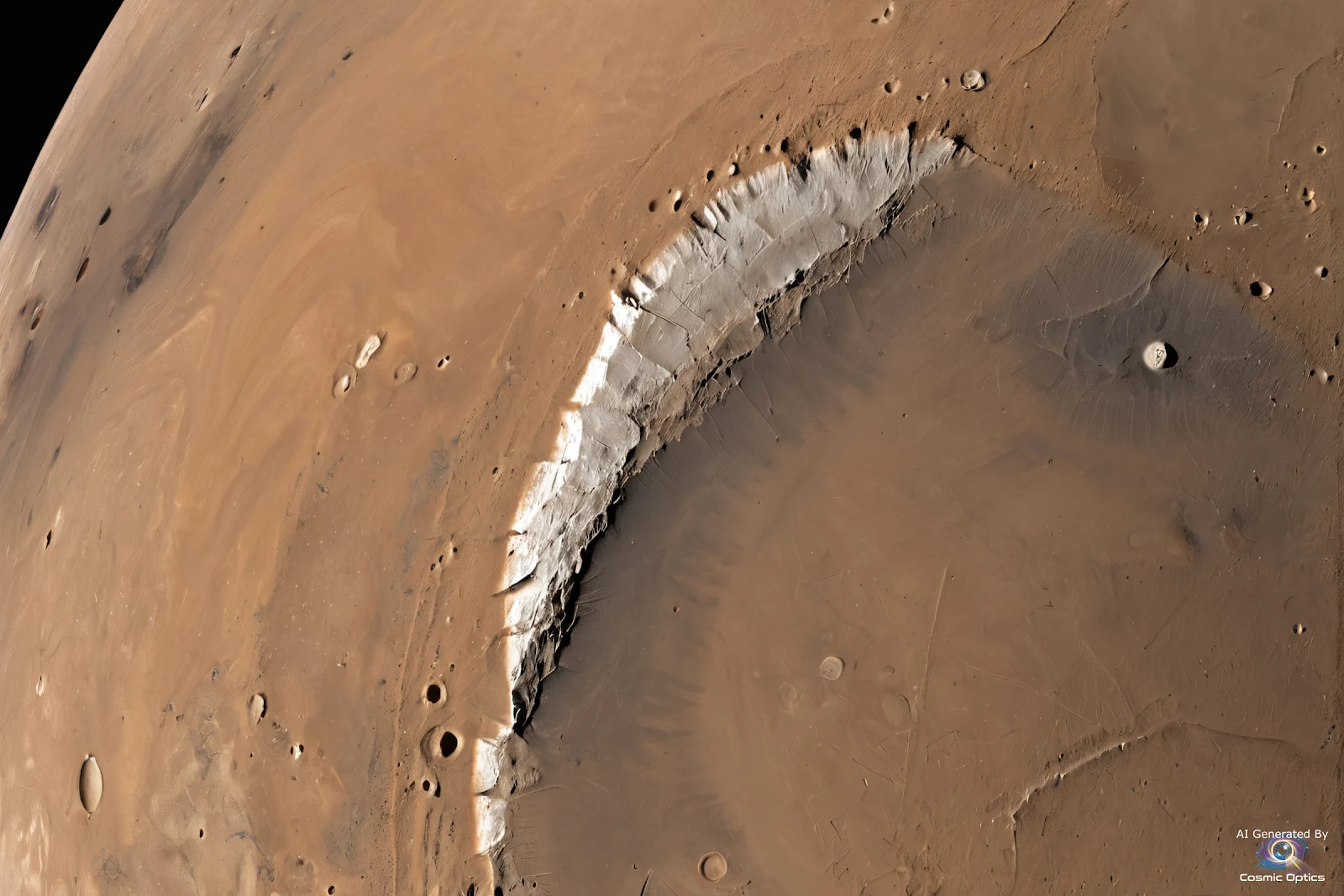
The allure of the Red Planet lies in its uncanny familiarity. It is a terrestrial planet, much like Earth, with a rocky surface, polar ice caps, and a day-night cycle that is remarkably similar to our own. Yet, beneath this surface-level resemblance lies a world of extremes that challenges our understanding of planetary evolution. Mars is home to the most magnificent geological features in the solar system. Consider Olympus Mons, a shield volcano so vast that it would cover the entire state of Arizona. Standing nearly three times the height of Mount Everest, it is a testament to a time when the Martian interior was a churning engine of volcanic activity. Because Mars lacks the tectonic plate movement found on Earth, volcanic hotspots remained stationary for billions of years, allowing mountains like Olympus Mons to grow to gargantuan proportions that would be physically impossible under Earth’s gravity and crustal dynamics.
Complementing these heights are the staggering depths of Valles Marineris. This grand canyon of Mars stretches over 4,000 kilometers long—roughly the distance from New York to Los Angeles—and plunges up to seven kilometers deep. If you were to stand on its rim, the opposite side would be far beyond the horizon. This scar across the Martian equator is a profound reminder of the planet's turbulent tectonic history, likely formed as the crust cracked under the weight of the massive volcanic Tharsis region nearby. These features are not merely landmarks; they are the pages of a geological history book that scientists are only beginning to decode.
Perhaps the most compelling mystery of Mars is the story of its water. Billions of years ago, Mars was not the desiccated, frozen wasteland we see today. Evidence gathered by orbiters and rovers points to a "Blue Mars" period, where liquid water flowed across the surface, carving intricate river deltas and filling massive lake basins. We see the fingerprints of this era in the minerals left behind—sulfates and clays that only form in the presence of water. The question that haunts astrobiologists is whether this ancient wet environment persisted long enough for life to take hold. Did single-celled organisms once thrive in Martian hot springs? Are there microfossils buried beneath the dust of Jezero Crater, waiting for a rover’s drill to find them?
The transition of Mars from a habitable world to a cold desert is a cautionary tale of planetary survival. Unlike Earth, Mars lost its global magnetic field early in its history. Without this protective shield, the relentless solar wind—a stream of charged particles from the sun—slowly stripped away the Martian atmosphere. What remains today is a thin veil of carbon dioxide, less than one percent as thick as Earth’s atmosphere. This loss of atmospheric pressure caused the surface water to either evaporate into space or retreat underground as ice. Today, Mars is a world locked in a deep freeze, yet even in this harsh environment, we find dynamic activity. Seasonal cycles cause the polar caps to expand and contract, and strange "spiders" form on the ice as carbon dioxide gas erupts through the surface in the spring.
Our ongoing exploration of Mars is one of the most ambitious scientific endeavors in human history. We have moved beyond simple flybys to sophisticated laboratories on wheels. Rovers like Curiosity and Perseverance are currently traversing the Martian terrain, equipped with lasers, spectrometers, and drills to analyze the chemical composition of the soil and rocks. They are searching for organic molecules—the building blocks of life—and preparing the way for the first-ever sample return mission. This effort to bring pieces of Mars back to Earth will likely provide the definitive answer to whether we are alone in the universe.
Looking forward, the focus is shifting from robotic exploration to the eventual arrival of human explorers. Mars is the ultimate frontier. To live there, we must solve incredible engineering challenges: generating oxygen from the thin CO2 atmosphere, shielding ourselves from high-energy cosmic radiation, and growing food in perchlorate-rich soil. Yet, the drive to reach the Red Planet remains undiminished. It is not just about scientific discovery; it is about the preservation and expansion of human consciousness. Becoming a multi-planetary species ensures that the flame of human knowledge and culture is not confined to a single world.
The journey to Mars is more than a technological hurdle; it is a profound philosophical milestone. Every time we look at the high-resolution images of its dusty plains and jagged craters, we are looking at a mirror of our own planet’s potential fate and a map of our future destiny. The Red Planet continues to call to us, a silent, ancient world that may hold the key to understanding our place in the vast, silent reaches of the cosmos. As we stand on the threshold of this new era of discovery, Mars remains the great catalyst for human ingenuity, reminding us that as long as there are stars in the sky and horizons to cross, our journey will never truly be over.


