
The Scorching Wonders of KELT-9b The Ultra-Hot World With an Atmosphere of Vaporized Metal
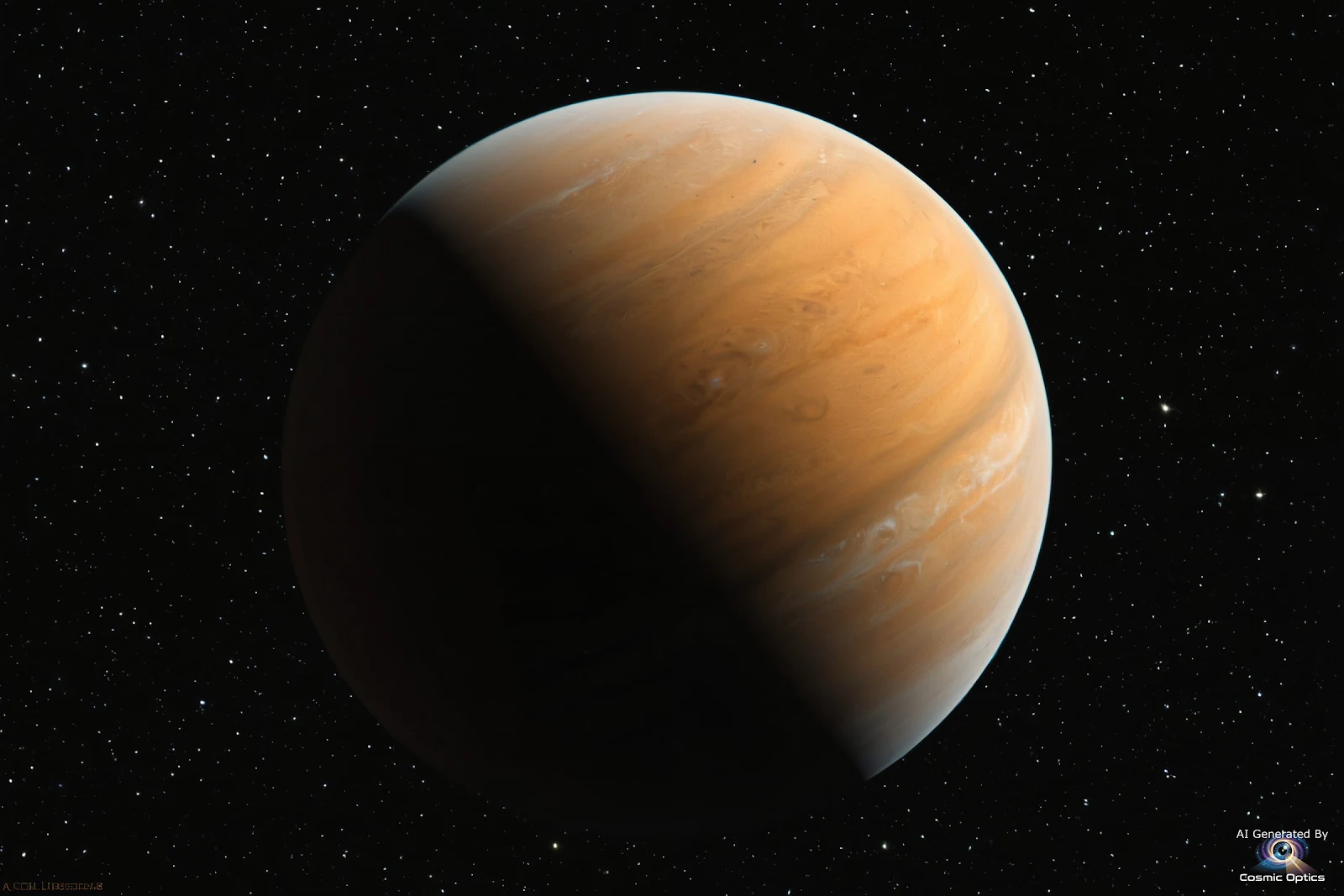
To understand the sheer intensity of KELT-9b, one must first look at its environment. While our own gas giants like Jupiter and Saturn reside in the cold outer reaches of the solar system, KELT-9b orbits its host star at a distance so close that it completes an entire "year" in just 1.5 Earth days. This proximity, combined with the nature of its parent star, creates a hellish landscape that is difficult to visualize. The host star, KELT-9, is an A-type star, significantly larger and twice as hot as our Sun. The radiation it pours onto its planetary companion is so ferocious that the dayside temperature of KELT-9b reaches a staggering 4,600 Kelvin (over 7,800 degrees Fahrenheit). To put that into perspective, this planet is hotter than the surface of most stars in our galaxy, including the common red dwarf stars.
The atmospheric conditions on KELT-9b are unlike anything found in the familiar territory of our solar system. On most planets, molecules like water, carbon dioxide, and methane can exist in the atmosphere. However, the heat on KELT-9b is so extreme that it acts like a giant furnace, ripping molecules apart into their constituent atoms. Scientists using high-resolution spectroscopy have discovered that the atmosphere of this giant world contains vapors of heavy metals. In a landmark discovery, researchers identified the signatures of gaseous iron and titanium in the planet’s sky. On Earth, these are solid metals used in construction and aerospace; on KELT-9b, they exist as a shimmering, metallic mist. This unique chemistry provides a rare window into the composition of planetary cores, as the heat has effectively "boiled" the internal elements into an observable atmospheric state.
The orbital dynamics of KELT-9b further emphasize its alien nature. Because the planet is tidally locked—meaning the same side always faces the star—it possesses a permanent dayside of eternal fire and a nightside of slightly less extreme, yet still incredibly high, temperatures. This massive temperature gradient likely drives supersonic winds that scream across the planet’s surface, transporting heat and ionized gas from one hemisphere to the other. Interestingly, the orbit of KELT-9b is "polar," meaning it travels over the poles of its star rather than around its equator. This suggests a chaotic past, perhaps involving gravitational tug-of-war with other unseen planets or a dramatic migration through the system during its infancy.
As we observe KELT-9b, we are essentially watching a planet in the process of being evaporated. The intense ultraviolet radiation from the host star is literally blasting the planet’s atmosphere away into space. Research suggests that KELT-9b is losing mass at a rate of up to 10 billion grams per second. This process creates a massive, comet-like tail of glowing gas trailing behind the planet as it speeds through its orbit. This "planetary evaporation" raises fascinating questions about the ultimate fate of such worlds. Will KELT-9b eventually be stripped down to its rocky or metallic core, becoming a "Chthonian" planet, or will it be consumed entirely by its star before its atmosphere can fully escape?
The study of KELT-9b is more than just an exercise in identifying record-breaking temperatures. It represents a vital frontier in the field of exoplanetary characterization. By analyzing how light from the host star filters through the planet’s puffed-up atmosphere, astronomers can identify chemical elements with incredible precision. This helps us refine our models of how planetary systems form and evolve under the most stressful conditions imaginable. It serves as a benchmark for what is possible in the universe, proving that nature’s imagination far exceeds our own. As we deploy more advanced tools like the James Webb Space Telescope and upcoming ground-based observatories, worlds like KELT-9b will continue to serve as the ultimate proving grounds for our theories of the cosmos.
In the vast tapestry of the night sky, KELT-9b stands as a testament to the diversity of the universe. It is a world where it rains iron, where a year passes in the blink of an eye, and where the line between a planet and a star becomes beautifully blurred. It reminds us that our own solar system, while home, is just one small, relatively calm corner of a galaxy filled with wonders that are as terrifying as they are magnificent. Every time we point our telescopes toward the stars of Cygnus, we are looking at a masterclass in stellar physics and a reminder that we have only just begun to scratch the surface of what lies beyond our horizon.


