
Unlocking the Ancient Mysteries and Future Potential of Our Solar System's Asteroids
The vast, silent expanse of our solar system is far from empty. Beyond the familiar silhouettes of the eight major planets lies a breathtaking frontier of rocky remnants, each a pristine time capsule from the dawn of our celestial neighborhood. These celestial wanderers, known as asteroids, represent some of the most compelling subjects in modern astrophysics. When we gaze upon a high-resolution capture of a rotating asteroid suspended in the deep velvet of the cosmic void, we are not just looking at a piece of stone; we are looking at the very building blocks that once swirled in the primordial nebula, eventually coalescing to form the world we call home.
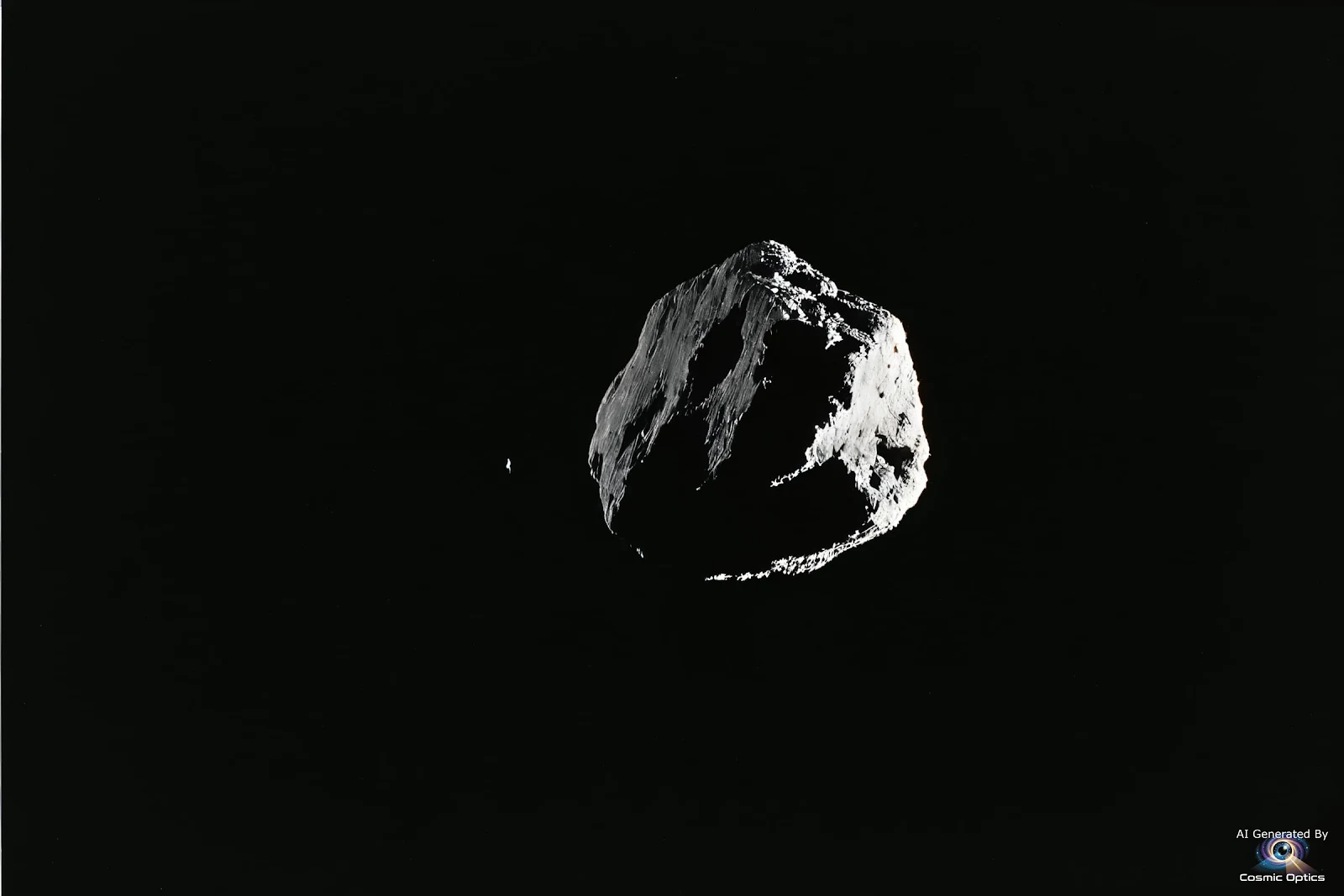
An authentic, true-color NASA photograph of a photograph of a rocky asteroid rotating in the dark vo_00002
The study of these ancient objects has entered a golden age, driven by a new generation of robotic explorers and sophisticated imaging techniques. For decades, asteroids were merely points of light in a telescope's eyepiece, often dismissed as the "vermin of the skies" by astronomers seeking distant stars. Today, however, they are recognized as the key to unlocking the mysteries of planetary formation. Most of these bodies reside in the Main Asteroid Belt between Mars and Jupiter, a region where the immense gravitational influence of the gas giant Jupiter prevented the rocky debris from ever gathering into a single, unified planet. Consequently, these objects have remained largely chemically unchanged for over 4.5 billion years.
One of the most thrilling aspects of contemporary space exploration is the ability to see these objects in "true color" and exquisite detail. Achieving such clarity is a monumental technical feat. Deep space photography requires balancing the harsh, unfiltered light of the sun against the absolute darkness of the vacuum. Because asteroids have no atmosphere to scatter light, the shadows they cast are deep and sharp, creating a high-contrast environment that reveals every crater, ridge, and regolith-covered plain. This rugged topography tells a story of a violent past—a timeline written in the scars of billions of years of high-speed collisions with other space debris.
NASA’s recent missions have brought us closer to these entities than ever before. Consider the groundbreaking achievements of the OSIRIS-REx mission, which traveled to the asteroid Bennu. Not only did the spacecraft orbit this carbon-rich body, but it also successfully touched the surface to collect a sample of its ancient dust. The data returned suggests that asteroids like Bennu may have acted as the "delivery trucks" of the early solar system, carrying water and organic molecules—the essential ingredients for life—to a young, cooling Earth. This realization shifts our perspective on these rocky bodies from mere hazards to potential ancestors of our own biological existence.
Furthermore, the diversity of asteroids is staggering. They are generally categorized into three main types based on their composition: C-type (carbonaceous), S-type (silicaceous), and M-type (metallic). C-type asteroids are the most common and are rich in carbon compounds, reflecting the chemistry of the early solar system. S-type asteroids are made of silicate materials and nickel-iron, while the rare M-type asteroids are thought to be the exposed metallic cores of shattered protoplanets. Imaging an M-type asteroid, such as the target of the upcoming Psyche mission, provides a rare glimpse into the "heart" of a planet that never was, offering insights into Earth’s own inaccessible core.
The dynamics of a rotating asteroid in the void are equally fascinating from a physics perspective. Many of these bodies are not solid monoliths but are instead "rubble piles"—loose collections of rocks held together by nothing more than their own weak gravity. As they rotate, centrifugal forces compete with this gravity, shaping the asteroid into unique geometries. Some take on a "spinning top" shape, with a pronounced equatorial ridge formed as loose material migrates toward the center during rotation. Observing these rotations over time allows scientists to calculate the object's mass, density, and internal structure, which is vital information for both scientific understanding and future planetary defense.
Planetary defense is perhaps the most pragmatic reason for our obsession with these rocks. The Double Asteroid Redirection Test (DART) recently proved that humanity has the capability to intentionally alter the orbit of a celestial body. By crashing a spacecraft into the moonlet of a binary asteroid system, NASA demonstrated that we are no longer helpless against the "celestial clockwork" that has historically caused mass extinctions on Earth. Every photograph and every data point gathered from these distant rocks strengthens our ability to predict orbits and develop strategies to protect our civilization from future impacts.
Looking toward the future, the narrative of asteroids is shifting from exploration to utilization. The concept of asteroid mining is moving from the realm of science fiction into serious feasibility studies. These floating islands are rich in platinum-group metals and, perhaps more importantly, water ice. Water can be broken down into hydrogen and oxygen to create rocket fuel, potentially transforming asteroids into "gas stations" for deep-space missions. This would allow spacecraft to refuel in orbit, drastically reducing the cost of traveling to Mars and beyond. The rocky surface we see in a photograph today might one day be the site of a thriving industrial outpost, fueling the next great expansion of the human race.
The sheer aesthetic beauty of a rocky body rotating in the void serves as a reminder of the elegance of the laws of physics. In the absence of wind, rain, or tectonic activity, these asteroids are the ultimate preservationists. They hold the records of the solar system’s birth, the history of its migrations, and the potential for its future. As our technology improves, we will continue to strip away the darkness of the void, revealing these silent sentinels in ever-greater detail. Each image is a bridge across the billions of miles, connecting our curiosity to the very origins of the cosmos.
Ultimately, the study of asteroids is a humbling endeavor. It reminds us that Earth exists within a dynamic and sometimes perilous environment, but it also highlights our incredible capacity to reach out and touch the stars. We are the first species on our planet capable of cataloging the heavens and understanding the stones that fall from them. With every mission and every authentic photograph captured, we move one step closer to solving the ultimate puzzle of our existence: where we came from and where we are going in this magnificent, star-dusted theater of the universe.


