
Venusian Rotations and Ancient Asteroids: Decoding the Complex History of Our Solar System
The cosmos is a realm of staggering contradictions and breathtaking anomalies that challenge our most fundamental perceptions of time, motion, and stability. While we perceive the rhythm of our lives through the predictable twenty-four-hour cycle of Earth’s rotation, other celestial bodies operate under a set of physical laws that seem almost paradoxical. Among these, the planet Venus stands as a monumental outlier, offering a profound lesson in the diverse mechanics of our solar system. On this scorching, cloud-shrouded world, the very definition of a "day" is stretched to an extreme that defies common intuition. Venus rotates on its axis so slowly that it completes a full circle around the Sun before it even manages a single rotation relative to the stars. This means that a sidereal day on Venus—the time it takes to spin once—lasts approximately 243 Earth days, while its orbital period, or year, is completed in just 225 Earth days. To experience a day longer than a year is a reality that highlights the chaotic and idiosyncratic history of planetary evolution.
This sluggish rotation is not merely a quirk of orbital math; it is a clue to a violent and mysterious past. Most planets in our solar system rotate in a prograde direction, spinning the same way they orbit the Sun. Venus, however, is one of the few that exhibits retrograde rotation, spinning clockwise. Scientists hypothesize that this may be the result of a colossal collision during the early, formative years of the solar system. A massive protoplanet may have struck Venus with enough force to nearly halt its spin or flip its orientation entirely. Another compelling theory suggests that the planet's incredibly dense atmosphere—roughly ninety times the pressure of Earth's—creates "atmospheric tides." The Sun’s gravitational pull on this thick blanket of carbon dioxide may have acted as a planetary brake over billions of years, slowing the rotation to the glacial pace we observe today. This interaction between a planet’s gaseous envelope and its solid crust demonstrates the complex feedback loops that govern planetary behavior.
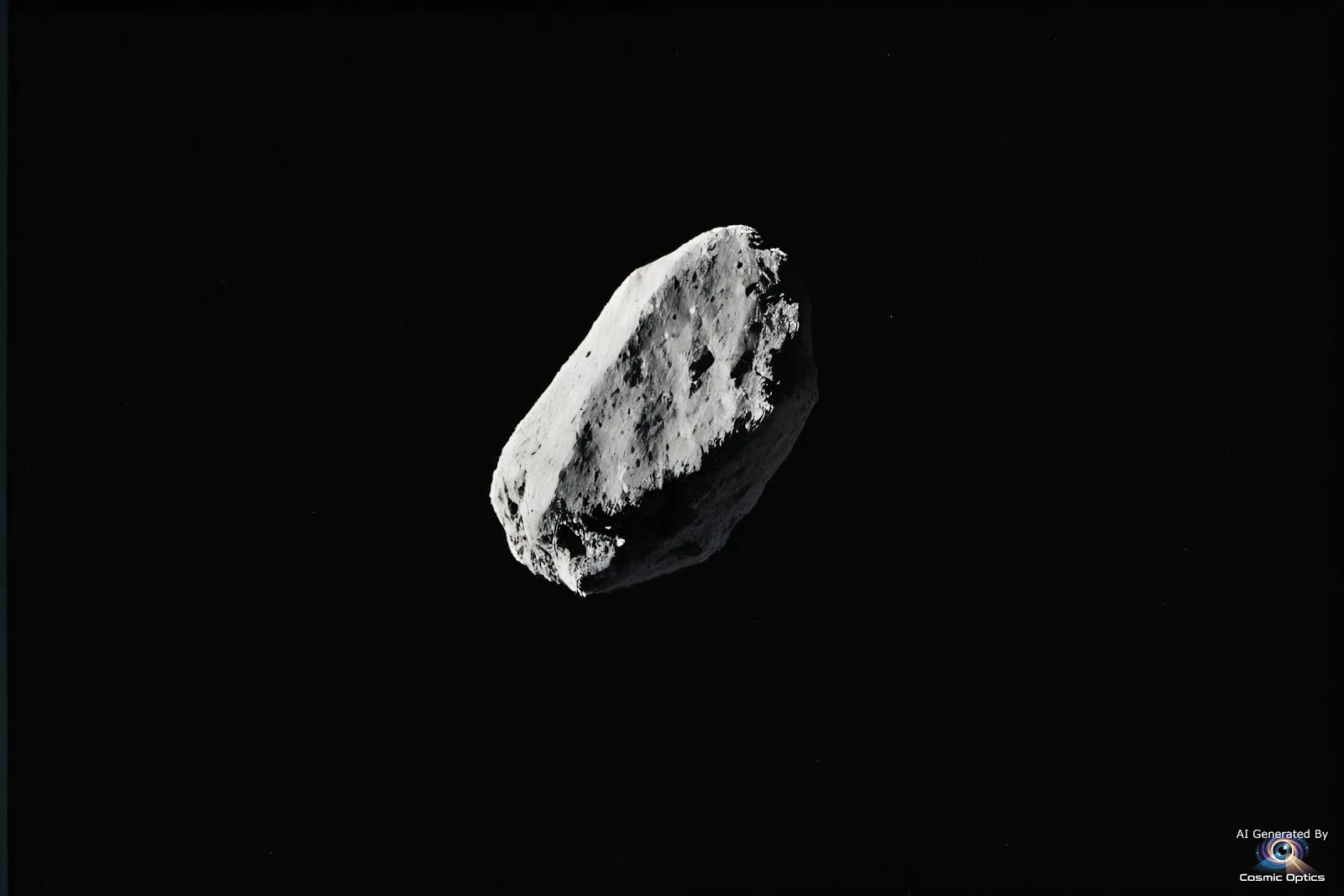
While the planets offer grand displays of atmospheric and rotational complexity, the smaller inhabitants of our solar system—the asteroids—provide the foundational narrative of our cosmic origins. These rocky remnants, drifting through the cold vacuum of space, are the "leftovers" from the primordial disk of gas and dust that eventually formed the Sun and its satellites. Unlike planets, which have undergone significant geological and chemical transformations over eons, many asteroids remain virtually unchanged since the dawn of the solar system. They are, in essence, pristine time capsules containing the original chemical signatures of the environment in which the Earth was born. Studying these celestial wanderers is not just a matter of curiosity; it is a forensic investigation into the building blocks of life itself.
Asteroids are far from uniform; they are categorized into distinct taxonomic classes based on their composition and the way they reflect sunlight. The most common are the C-type or carbonaceous asteroids, which are rich in carbon and volatile compounds. These are thought to be some of the oldest objects in the solar system and may have been the primary delivery mechanism for water and organic molecules to the early Earth. Then there are the S-type or silicaceous asteroids, composed primarily of iron- and magnesium-silicates, and the rarer M-type asteroids, which are metallic and dominated by nickel and iron. Each of these classes tells a different story about the temperatures and pressures present in different regions of the early solar nebula, allowing astronomers to map the thermal history of our neighborhood with remarkable precision.
The distribution of these bodies is equally telling. The majority reside within the Main Asteroid Belt, a vast region located between the orbits of Mars and Jupiter. It was once thought that this belt represented the remains of a planet that had been destroyed, but we now know that Jupiter’s immense gravitational influence prevented these fragments from ever coalescing into a single world. Instead, they remain a scattered collection of trillions of objects, ranging from the size of dust motes to the dwarf planet Ceres, which spans nearly 600 miles in diameter. The constant gravitational tug-of-war between the Sun and the gas giants occasionally nudges these rocks out of their stable orbits, sending them on paths that can intersect with the inner planets, including our own.
The study of Near-Earth Objects (NEOs) has become a cornerstone of modern planetary science, blending the thrill of discovery with the necessity of planetary defense. While the word "asteroid" often evokes images of catastrophic impacts, these events are exceedingly rare on a human timescale. However, the history of Earth is punctuated by such encounters, most notably the impact 66 million years ago that altered the course of biological history. Today, international efforts such as NASA’s Planetary Defense Coordination Office utilize advanced ground-based telescopes and space-borne assets to track hundreds of thousands of asteroids. The recent success of the DART (Double Asteroid Redirection Test) mission proved that we possess the nascent technology to alter the trajectory of a celestial body, marking the first time humanity has demonstrated the ability to actively protect its home from cosmic threats.
Looking toward the future, asteroids are being viewed not just as hazards or scientific curiosities, but as the next frontier for resource acquisition. The burgeoning industry of space mining proposes that these bodies could provide the raw materials necessary for deep-space exploration. M-type asteroids contain concentrations of precious metals—such as platinum, palladium, and gold—that far exceed the richest deposits on Earth. More importantly, carbonaceous asteroids contain water ice, which can be harvested and processed into liquid oxygen and hydrogen to serve as "gas stations" in orbit. By utilizing the resources found in space, humanity could significantly reduce the cost and complexity of traveling to Mars and beyond, transforming us into a truly multi-planetary species.
The intricate dance of the planets and the silent journey of the asteroids remind us that we inhabit a dynamic and ever-evolving environment. From the bizarre, slow-motion world of Venus to the metallic hearts of drifting space rocks, the solar system is a treasure trove of information waiting to be decoded. Every mission, every photograph, and every spectral analysis brings us closer to understanding how a cloud of dust transformed into a complex system capable of supporting life. As we continue to gaze upward, we are not just looking at cold stones and distant gases; we are looking at our own history and a roadmap for our future among the stars.


