
The Enigmatic World of Haumea: A Rapidly Rotating Jewel in the Kuiper Belt
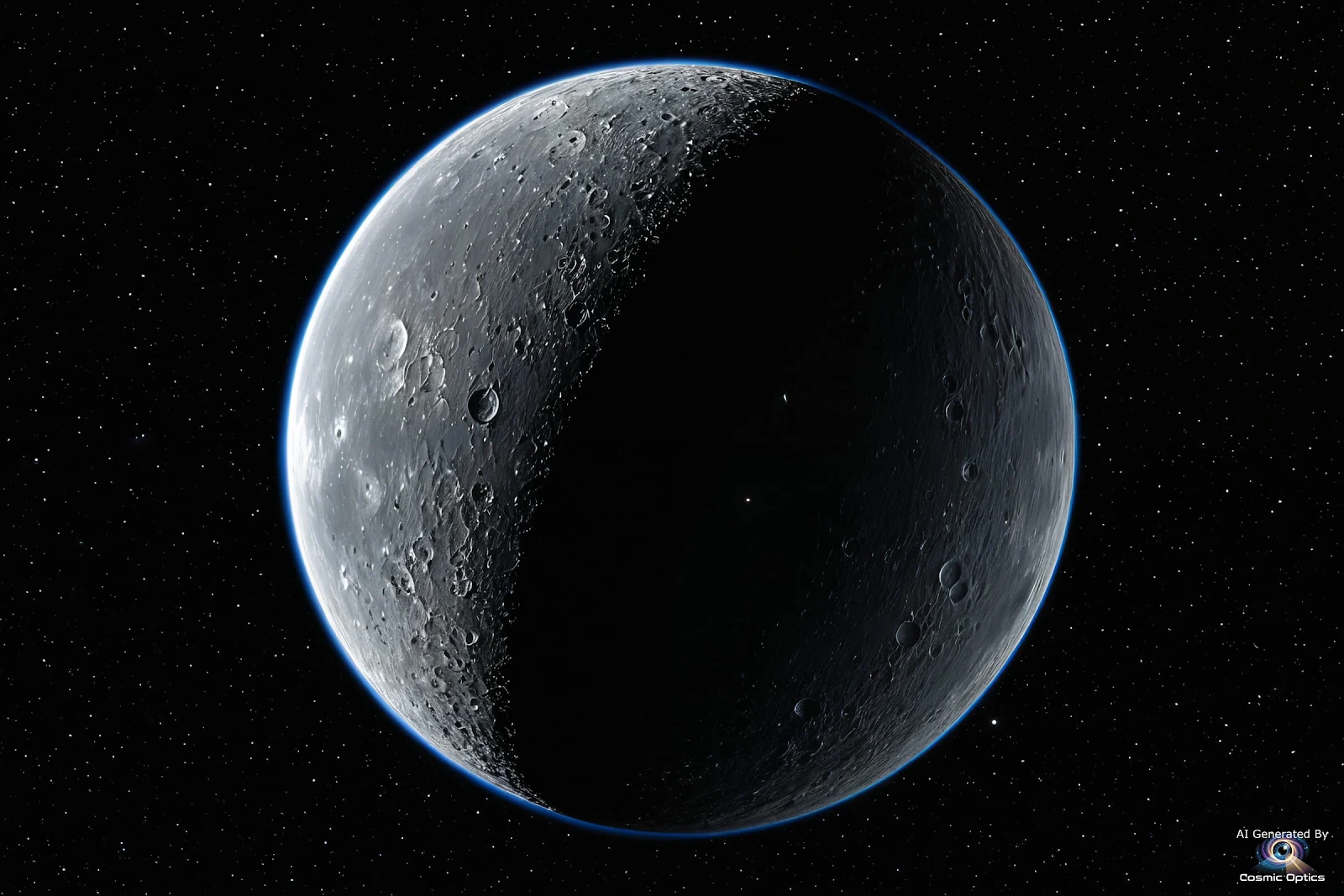
An authentic, photorealistic astronomical photograph of the dwarf planet Haumea floating in the abso_00039
Deep within the frozen frontiers of our solar system, far beyond the orbit of Neptune, lies a realm of icy enigmas known as the Kuiper Belt. Among the thousands of objects drifting in this celestial graveyard of the early solar system, one particular world stands out as a true cosmic oddity. Haumea, the fourth-largest dwarf planet, is a masterclass in planetary physics and a testament to the violent, dynamic history of our cosmic neighborhood. Unlike the spherical worlds we are accustomed to seeing in textbooks, Haumea challenges our expectations with its bizarre elongated shape and a suite of features that seem to defy the quiet nature of the outer reaches.
The most immediate and striking characteristic of Haumea is its geometry. It is not a sphere, but rather a triaxial ellipsoid, resembling a massive, gleaming white football tumbling through the void. This peculiar shape is not a fluke of formation but a direct consequence of its incredible rotational velocity. Haumea spins faster than any other large object in our solar system, completing a full revolution on its axis in just under four hours. This dizzying speed creates immense centrifugal forces that have stretched the dwarf planet out, preventing gravity from pulling it into a perfect round. To imagine the scale of this, one must picture a world roughly the mass of one-third of Pluto, spinning so violently that it has physically deformed into an oblong jewel.
The origins of this rapid spin and unique shape point toward a catastrophic event in the distant past. Planetary scientists believe that billions of years ago, Haumea was involved in a massive collision with another large Kuiper Belt object. This impact was so energetic that it stripped away much of the planet's outer layer of ice, increased its spin rate, and sent a cloud of debris into orbit. This theory is supported by the existence of the "Haumea family," a group of smaller icy bodies in similar orbits that appear to be fragments of the dwarf planet itself. This makes Haumea the only dwarf planet known to have a "collisional family," providing researchers with a rare "crime scene" to study the history of impacts in the outer solar system.
Beyond its shape, Haumea holds another secret that shocked the astronomical community upon its discovery in 2017: a ring system. While rings are common among the gas giants like Saturn and Uranus, finding a ring around a small, rocky-icy body so far from the Sun was unprecedented. This narrow, dense ring orbits Haumea at a distance of about 2,287 kilometers, lying in the same plane as its equator. The presence of this ring suggests that such structures might be more common in the deep cold of space than we previously dared to imagine. It serves as a shimmering halo, likely composed of dust and ice particles kicked up during that ancient, transformative collision.
The beauty of Haumea is further enhanced by its two companions, the moons Hiʻiaka and Namaka. Named after the daughters of the Hawaiian goddess of fertility and childbirth, these moons are as fascinating as the primary body they orbit. Hiʻiaka, the larger and outer moon, has a surface covered in pure water ice, suggesting it too may be a fragment of Haumea’s original crust. Namaka, the smaller moon, follows a more eccentric path, influenced by the gravitational tugs of its larger sibling. Together, this trio forms a complex gravitational dance that allows astronomers to precisely calculate Haumea’s mass and density, revealing a world that is surprisingly rocky beneath its icy veneer.
Speaking of its surface, Haumea is exceptionally bright. It possesses an albedo—a measure of reflectivity—similar to that of freshly fallen snow. This high reflectivity is caused by a thin layer of crystalline water ice coating its surface. Crystalline ice is a rarity in the extreme cold of the Kuiper Belt, where temperatures hover around -400 degrees Fahrenheit. At such low temperatures, ice usually takes on an amorphous, disordered structure. The presence of crystalline ice implies that some internal heat source, or perhaps the constant bombardment of cosmic rays, is refreshing the surface. This suggests that Haumea is not just a dead rock, but a world with ongoing physical processes that keep its "skin" looking brand new.
Studying Haumea is a challenge of the highest order. Located roughly 43 astronomical units from the Sun—that is 43 times the distance between Earth and the Sun—it appears as little more than a pinpoint of light to even the most powerful ground-based telescopes. Much of what we know comes from "stellar occultations," rare events where Haumea passes in front of a distant star, allowing its shadow to reveal its dimensions and the presence of its rings. These observations require global cooperation among astronomers, timing their measurements to the fraction of a second as the shadow sweeps across the Earth.
The discovery of Haumea itself was a subject of great international interest and some controversy, highlighting the competitive nature of modern astronomy. Two teams—one led by Mike Brown at Caltech and another by José Luis Ortiz Moreno at the Sierra Nevada Observatory in Spain—spotted the object in the mid-2000s. While the naming rights eventually followed a complex path, the result was the recognition of a world that celebrates Hawaiian culture, fitting for a discovery that expanded our horizons so dramatically. The name "Haumea" reflects the theme of birth and creation, appropriate for a body that "gave birth" to its moons and a whole family of icy fragments through a violent cosmic rebirth.
As we look to the future of space exploration, Haumea remains a high-priority target for theoretical missions. While no spacecraft has yet visited this distant ellipsoid, the success of the New Horizons mission to Pluto has proven that these "third zone" worlds are far more complex and geologically active than we ever suspected. A mission to Haumea would provide answers to fundamental questions about the formation of our solar system, the behavior of matter under extreme rotation, and the distribution of water in the cosmos. It is a world that invites us to dream bigger, reminding us that even in the darkest, coldest corners of our neighborhood, there are wonders waiting to be understood, shimmering with the reflected light of a distant Sun.