Trees vs. Stars: Earth's Astonishing Life Density Revealed
What an astonishing universe we inhabit, a realm of scales so immense they frequently defy our comprehension! We often gaze at the night sky, overwhelmed by the countless pinpricks of light, each a distant sun, and feel a profound sense of our own smallness. The vastness of space, the staggering number of stars in our home galaxy, the Milky Way, often leaves us breathless. Yet, turn your gaze back to our verdant planet, Earth, and prepare for a perspective shift that is nothing short of extraordinary.
Imagine, if you will, the sheer volume of life that pulses across our world. From the ancient, towering sequoias that scrape the sky to the tenacious saplings pushing through cracks in the tundra, trees are everywhere. They carpet continents, anchor ecosystems, and form the very lungs of our planet. For centuries, estimating their numbers felt like an impossible task, a guess at best. But thanks to painstaking global surveys, satellite imagery, and advanced ecological modeling, scientists have arrived at a truly mind-boggling figure: Earth is home to approximately three trillion trees. Yes, that's 3,000,000,000,000 individual trees, each a testament to life's persistent vitality.
Now, let's cast our minds back to the cosmos, to our own spiral island of stars, the Milky Way. Our galaxy is a breathtaking spectacle, an unimaginable collection of gas, dust, dark matter, and, of course, stars. These stellar furnaces vary wildly in size, color, and luminosity, from fiery red dwarfs to brilliant blue giants. Estimating the total number of stars within our galaxy is a complex astronomical challenge, involving observations of stellar populations, luminosity functions, and galactic models. Current scientific consensus places the number somewhere between 100 billion and 400 billion stars. That's a truly colossal number, a figure that for most of human history felt like the absolute pinnacle of cosmic abundance.
But here's where the revelation truly hits home: if you compare those numbers, the three trillion trees on Earth against the 100 to 400 billion stars in the Milky Way, a breathtaking truth emerges. There are, quite literally, more individual trees rooted on our single planet than there are stars shimmering across the entirety of our sprawling home galaxy! Take a moment for that to sink in. This isn't just an interesting fact; it's a profound statement about the density of life on Earth and the vast, often empty, expanse of space.
How can such a seemingly impossible comparison hold true? It speaks volumes about the unique conditions present on Earth. Our planet is a biological marvel, a vibrant oasis perfectly positioned in the habitable zone of our Sun. It possesses liquid water, a protective atmosphere, and a dynamic climate system that fosters an incredible diversity and abundance of life. Trees, in particular, are remarkable photosynthetic powerhouses, converting sunlight, water, and carbon dioxide into biomass and the oxygen essential for countless other life forms. Their sheer prevalence underscores Earth's extraordinary capacity for biological productivity.
The science behind these staggering figures is a triumph of modern research. Counting trees has evolved from local forest inventories to sophisticated global analyses. Remote sensing technologies, including satellites and aerial photography, combined with on-the-ground surveys, allow researchers to map and estimate forest cover and density with unprecedented accuracy. For stars, astronomers piece together galactic structure using telescopes that observe light across the electromagnetic spectrum, from radio waves to X-rays. By studying the distribution, luminosity, and types of stars in observable regions, they can extrapolate to estimate the total population of our galaxy, factoring in obscuring dust and gas. Both endeavors represent monumental scientific undertakings, yielding numbers that challenge our intuitions.
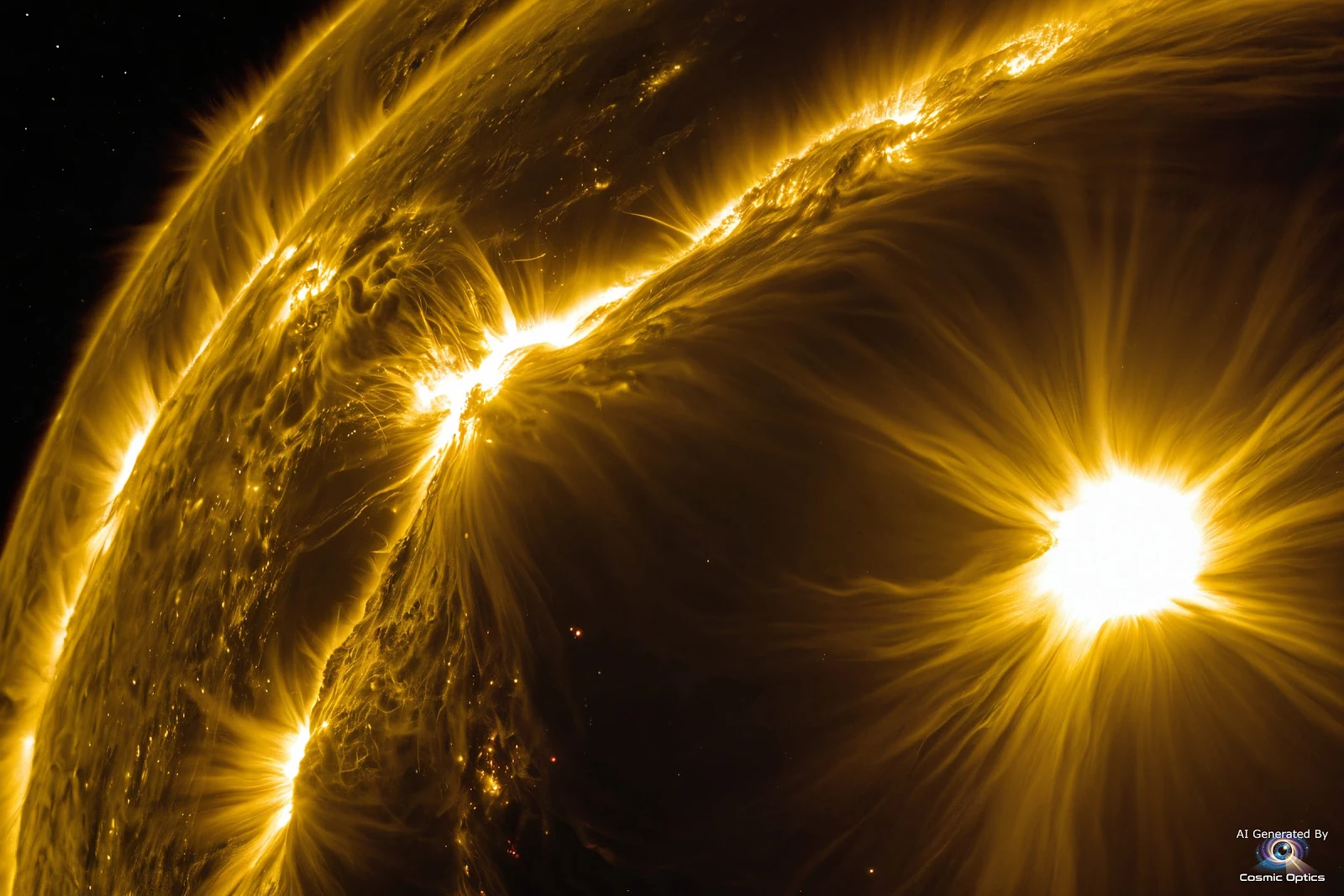
Crucially, the existence of those trillions of trees, that astonishing terrestrial abundance, is entirely dependent on a single, albeit magnificent, star: our Sun. It is the Sun's boundless energy, radiated across 150 million kilometers of space, that fuels every leaf, every branch, every root. This incredible close-up view of its dynamic, roiling surface reminds us of the raw power and intricate processes occurring within our life-giving star. Its consistent output of light and heat is the fundamental engine driving photosynthesis, the very process that allows trees to grow, thrive, and ultimately outnumber the distant celestial bodies of our galaxy. The Sun is not just a star among billions; for Earth, it is *the* star, the solitary source of the warmth and light that sustains our planet's vibrant tapestry of life.
This incredible juxtaposition offers a fresh perspective on our place in the cosmos. While the galaxy stretches out with its billions of stars, each a potential sun for other worlds, our particular world teems with a hyper-dense concentration of living organisms visible even from space. It transforms the abstract numbers of astronomy into a tangible appreciation for the unique, vibrant miracle that is Earth. It reminds us that while the universe is unimaginably vast and full of wonders, our own planet holds a special, flourishing magic that rivals even the most stellar of spectacles. So next time you look up at the night sky or gaze upon a forest, let this mind-bending fact fill you with awe for both the cosmic grandeur and the incredible, irreplaceable richness of life right here at home.