
Venus: Earth's Scorching Twin and a Cosmic Paradox
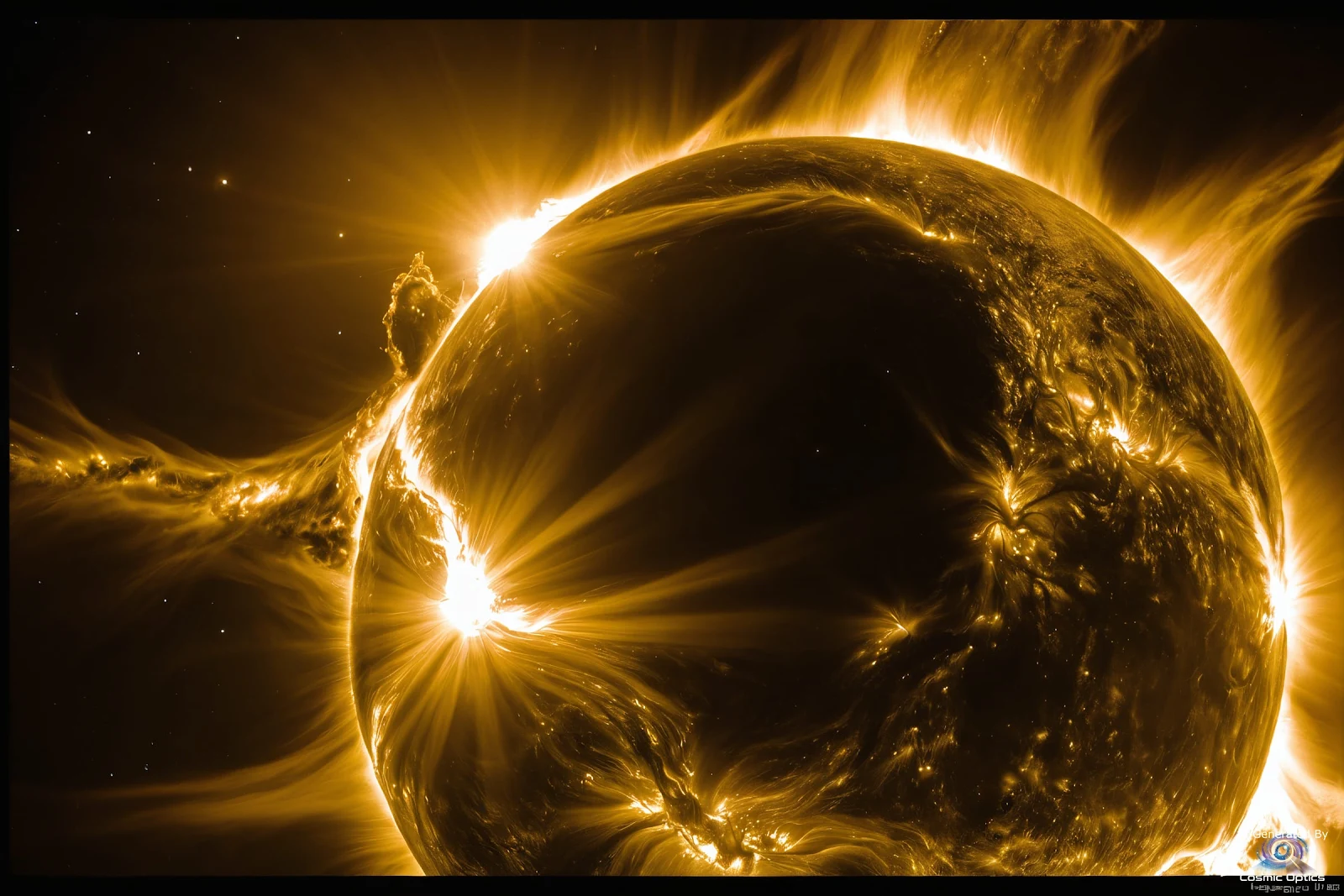
This bizarre celestial ballet is further complicated by the fact that Venus rotates backward, or retrogradely, compared to the other planets in our solar system. If you were somehow able to stand on its surface, the Sun would appear to rise in the west and set in the east, albeit at an incredibly languid pace, taking months to traverse the sky. The exact reasons for this unique retrograde rotation remain a topic of intense scientific debate, with leading theories suggesting a massive ancient impact or complex tidal interactions with the Sun acting on its incredibly dense atmosphere could have flipped the planet's axis or slowed its spin to such an unusual crawl.
Beyond its peculiar spin, Venus's atmosphere is a truly terrifying marvel. It’s an inferno of carbon dioxide, laced with thick clouds of sulfuric acid that perpetually shroud the planet, reflecting about 70% of the sunlight that reaches it.
This dense blanket creates an atmospheric pressure on the surface more than 90 times that of Earth's at sea level – equivalent to the pressure found nearly a kilometer deep in Earth's oceans. Beneath these perpetually roiling clouds, the carbon dioxide acts as an incredibly efficient greenhouse gas, trapping solar radiation and creating a runaway greenhouse effect that has transformed Venus into the hottest planet in our solar system, with surface temperatures soaring to an unbearable 462 degrees Celsius (863 degrees Fahrenheit). This is hot enough to melt lead, making it hotter even than Mercury, which is much closer to the Sun but lacks Venus's insulating atmosphere. The air is so thick, it would feel like swimming through a dense fluid, with winds at cloud-top level roaring at hundreds of kilometers per hour, while near the surface, they barely stir.
The surface of Venus is a testament to immense geological activity, albeit in conditions unlike anything found on Earth.
Radar mapping, primarily conducted by NASA’s Magellan spacecraft, has unveiled a world dominated by vast plains covered in lava flows, punctuated by thousands of volcanoes, some of which are truly colossal. While evidence of active volcanism today is still debated, the sheer scale of the volcanic features suggests a relatively young surface, continuously resurfaced by molten rock erupting from the planet's interior. There are also unique pancake-shaped domes, spider-web-like networks of ridges and troughs called arachnoids, and impact craters, though fewer than on many other solar system bodies, implying that geological processes have erased older ones.
There are no oceans, no liquid water, and certainly no signs of life as we know it; only a vast, dry, extremely hot, and highly volcanic landscape simmering under an acidic, high-pressure sky.
Studying Venus is not merely an academic exercise; it's a vital part of understanding Earth's past and future. Often dubbed our "evil twin," Venus serves as a stark cautionary tale. It vividly demonstrates what can happen to a terrestrial planet when a runaway greenhouse effect takes hold, transforming a potentially habitable world into an uninhabitable hellscape. By unraveling the complex processes that led Venus down this extreme path, scientists gain crucial insights into climate dynamics, atmospheric evolution, and the potential fates of other exoplanets we discover. It highlights the delicate balance that allows Earth to maintain its life-sustaining conditions and provides context for the climate challenges we face on our own world.
Despite the incredibly harsh conditions, humanity has repeatedly ventured to Venus. The Soviet Union's Venera program achieved monumental firsts, including the first successful atmospheric entry, soft landing, and surface images transmitted from another planet.
These incredibly robust probes, designed to withstand the crushing pressure and searing heat for brief periods, provided our first tantalizing glimpses of a truly alien landscape. Later missions, like NASA's Magellan, meticulously mapped 98% of Venus's surface with radar, revealing its hidden geology. More recently, the European Space Agency's Venus Express and Japan's Akatsuki orbiter have continued to study its atmospheric dynamics and complex cloud structures from above. Future missions are being planned, including those that might deploy specialized balloons into the more temperate upper atmosphere, or even more resilient landers, to unlock deeper secrets of this enigmatic world.
Each data point, each image, brings us closer to understanding how our "sister" planet veered so dramatically off course.
In essence, Venus is a laboratory of extremes, a cosmic lesson in planetary resilience and fragility. Its peculiar rotation, its suffocating atmosphere, its volcanic plains, and its searing temperatures all paint a picture of a world both familiar and utterly alien.
It stands as a powerful reminder of the diversity of worlds within our own cosmic neighborhood and continues to challenge our assumptions about planetary formation and evolution. Venus, the veiled planet, remains a treasure trove of scientific inquiry, beckoning us to understand the dramatic forces that shape worlds, and perhaps, to better appreciate the precious balance that sustains life on our own blue marble. Its very existence fuels our boundless wonder and drives our relentless quest to explore the cosmos.


