
The Enigmatic Dwarf Planets: Time Capsules of Our Solar System's Beginnings
Our cosmic neighborhood is a tapestry woven with countless celestial wonders, each telling a unique story of formation and evolution. Beyond the familiar giants and rocky inner worlds, a fascinating category of celestial bodies captivates scientists and enthusiasts alike: the dwarf planets. These enigmatic objects, residing primarily in the frigid outer reaches of our solar system, offer an unparalleled glimpse into the primordial conditions that shaped our planetary system billions of years ago.
The very definition of what constitutes a "planet" underwent a significant re-evaluation in 2006, leading to the creation of the dwarf planet classification. Prior to this, our understanding was simpler, but as telescopic technology advanced and more distant, substantial bodies were discovered, the scientific community faced a delightful dilemma. These new discoveries were too large to be mere asteroids, yet they didn't quite fit the grand scale and orbital dominance of the traditional planets. The International Astronomical Union (IAU) ultimately settled on three criteria for a full-fledged planet: it must orbit the Sun, be massive enough to be nearly round due to its own gravity, and have "cleared the neighborhood" around its orbit. Dwarf planets meet the first two criteria but fall short on the third, meaning their gravitational pull isn't strong enough to sweep up or eject all other objects in their orbital path.
This reclassification brought a notable and much-loved celestial body into the dwarf planet fold, igniting a passionate debate that continues to this day. This iconic distant world, once considered the ninth planet, became the most famous ambassador for its new category. Discovered in 1930, its journey from planetary status to dwarf planet has only enhanced its allure, focusing attention on its unique characteristics rather than just its size. This distant outpost, typically colder than any earthly deep freeze, boasts a surprisingly complex surface of icy plains, towering mountains made of water ice, and vast nitrogen glaciers that flow like rivers. Its thin, tenuous atmosphere, composed mainly of nitrogen, methane, and carbon monoxide, expands when it nears the Sun and contracts as it retreats, a fascinating cosmic breath.
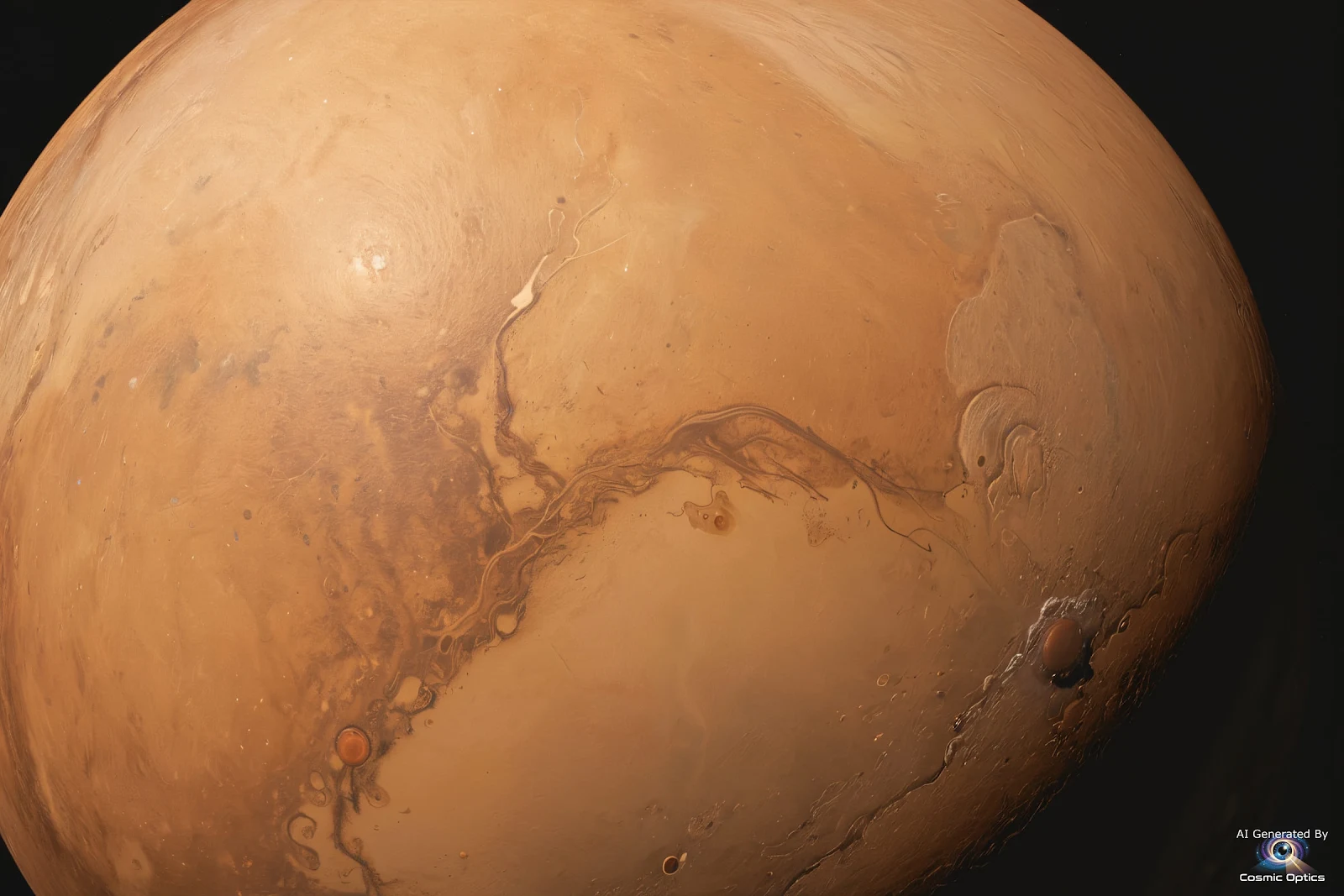
The revelations about this far-flung dwarf planet were dramatically enhanced by a historic flyby mission that provided humanity with its first close-up views. The images transmitted back to Earth were nothing short of breathtaking, revealing a world far more dynamic and geologically active than previously imagined. Heart-shaped plains, vast chasms, and evidence of cryovolcanism — where icy materials erupt instead of molten rock — painted a picture of a body teeming with hidden energies. Its largest moon, a remarkably substantial companion, is locked in a synchronous orbit, forever showing the same face to its parent body, further adding to the system's gravitational dance and complexity.
Beyond this beloved dwarf planet, several other members populate this intriguing classification. Ceres, nestled within the main asteroid belt between Mars and Jupiter, stands out as the largest object in that region and the only dwarf planet in the inner solar system. Its surface, observed up close by another dedicated mission, shows bright spots believed to be salts left behind by evaporating briny water, hinting at a potentially active watery past. Further out, in the Kuiper Belt, a vast ring of icy bodies beyond Neptune, we find others like Eris, initially thought to be larger than the famous dwarf planet, and others with peculiar shapes and rapid rotations like Haumea, or enigmatic dark surfaces like Makemake. Each of these worlds holds clues to the conditions that prevailed in the very early solar system, offering pristine samples of the building blocks from which the larger planets formed.
The study of dwarf planets is not just about cataloging objects; it's about understanding the fundamental processes of planetary accretion and differentiation. These small, yet mighty, worlds are essentially time capsules. Their compositions, often rich in ices and volatile compounds, tell us about the materials available in the colder, outer disk of gas and dust from which our solar system emerged. They help us trace the migration of giant planets, the impact history that shaped surfaces, and even the potential for subsurface oceans, which could harbor conditions for rudimentary life, pushing the boundaries of where we might find habitability beyond Earth.
As our technology continues to advance, opening new windows into the cosmos, the census of dwarf planets is likely to grow. Each new discovery, each new close-up image, refines our understanding of the universe's incredible diversity and the intricate ballet of gravity and matter that governs it. The enthusiasm for these distant, icy worlds remains boundless, reminding us that even the smallest members of our solar family can hold the biggest secrets, waiting to be unlocked by the insatiable human quest for knowledge.


