
The Brilliant Icy World That Redefined Our Understanding Of The Solar System
Deep in the frozen frontiers of our solar system, far beyond the familiar orbit of the gas giants and the icy reaches of Neptune, lies a realm of perpetual twilight known as the Scattered Disc. It is here, amidst a silent graveyard of ancient celestial debris, that one of the most significant and luminous worlds of the modern era resides. This world, a dwarf planet of staggering brilliance and profound scientific importance, represents the final frontier of our immediate cosmic neighborhood. Its discovery did not just add a new name to our astronomical maps; it fundamentally reshaped our entire philosophy regarding what constitutes a planet and forced a total re-evaluation of the architecture of our solar system.
When we look toward the outer edges of the sun's influence, we find ourselves staring into a massive, three-dimensional puzzle. For decades, Pluto reigned as the undisputed king of this distant reach, the lonely sentinel of the ninth orbital path. However, in early 2005, a team of dedicated astronomers at the Palomar Observatory identified a light source so bright and a mass so significant that it sent shockwaves through the scientific community. This object was more than just another icy wanderer; it was a world that directly challenged Pluto’s supremacy. The sheer scale of this new discovery was so impactful that it was initially hailed by many as the "tenth planet," a title that sparked an unprecedented global conversation about the nature of our celestial surroundings.
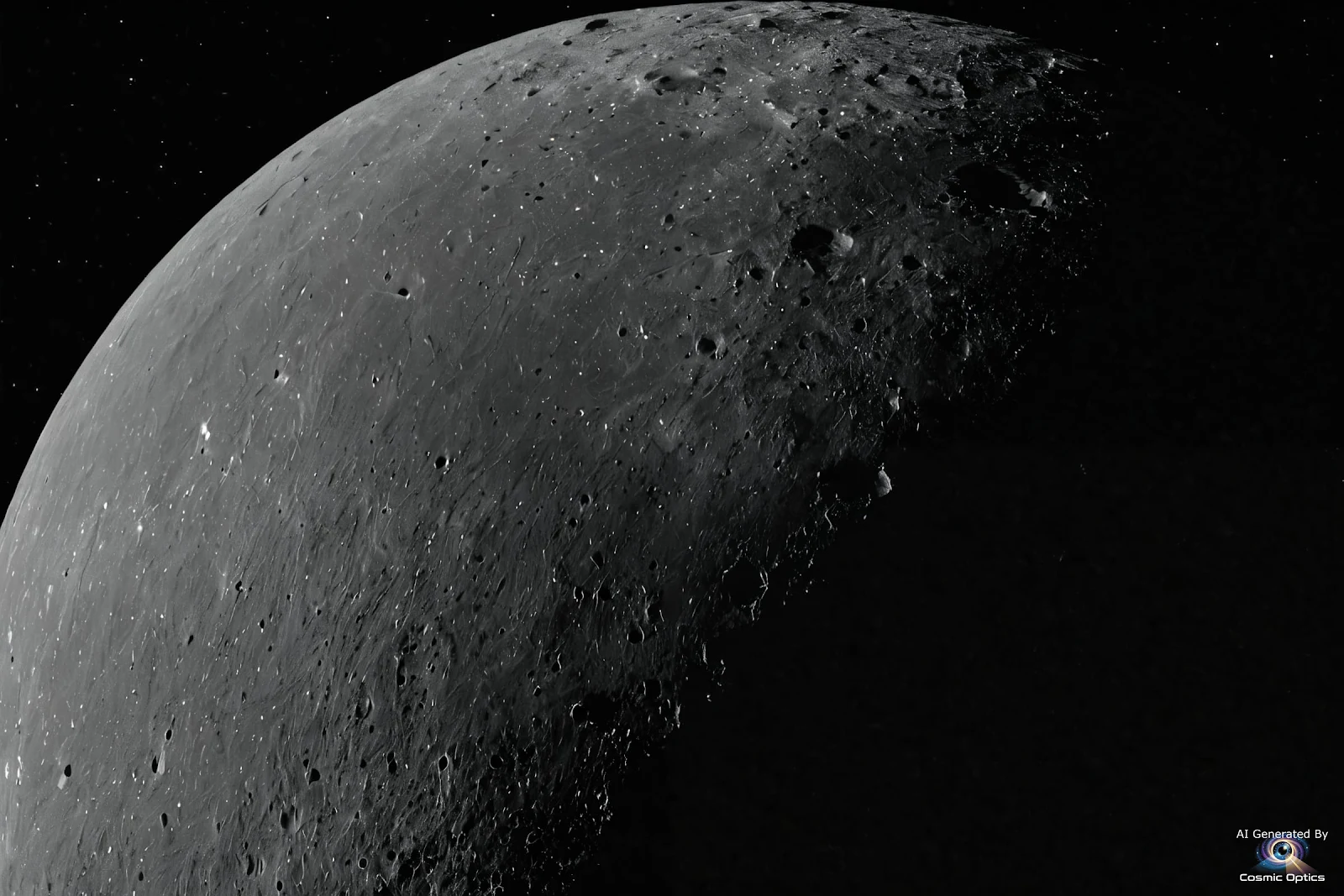
What makes this distant world so captivating is its incredible physical composition. Despite being located at an average distance of about 68 astronomical units from the sun—nearly twice as far as Pluto—it shines with a ghostly, brilliant luster. Astronomers have determined that it possesses one of the highest albedos, or reflectivity levels, of any object in the solar system. It reflects approximately 96% of the light that hits it, making it look almost like a polished mirror or a fresh fallen field of snow. This high reflectivity is likely caused by a layer of methane ice mixed with nitrogen, which freezes out of a thin atmosphere and coats the surface in a pristine, white glaze. Because its orbit is so eccentric, the planet experiences extreme seasonal shifts. When it moves closer to the sun, its frozen surface sublimates into a thin gas; as it retreats into the deep cold of the outer reaches, that atmosphere collapses and snows back down onto the surface, constantly renewing its brilliant, reflective coat.
The discovery of this world provided the crucial data point that necessitated the 2006 redefinition of a "planet" by the International Astronomical Union (IAU). When initial measurements suggested that this new body was actually more massive than Pluto, scientists were faced with a dilemma: either the solar system had at least ten planets, or the definition of a planet needed to be tightened. The resulting classification of "dwarf planet" was created to categorize these massive, spherical bodies that had not yet "cleared the neighborhood" of their orbits. While some enthusiasts mourned the reclassification of Pluto, the scientific reality was exhilarating. It revealed that the outer solar system was far more crowded and dynamic than we had ever dared to imagine. We were not losing a planet; we were gaining an entire new class of worlds to explore and understand.
Further investigation revealed that this dwarf planet is not a solitary traveler. It is orbited by a small, faithful moon named Dysnomia. The presence of this moon was a stroke of luck for astronomers, as observing the moon’s orbit allowed scientists to calculate the mass of the primary body with high precision using Kepler’s laws of planetary motion. They discovered that while the dwarf planet is slightly smaller in diameter than Pluto, it is approximately 27% more massive. This indicates a much higher density, suggesting a rocky core beneath its thick mantle of ice. This internal structure makes it a fascinating subject for study, as it represents a pristine relic from the formation of the solar system, preserved in the deep freeze of space for billions of years.
The orbital mechanics of this region are equally fascinating. Unlike the relatively circular and flat orbits of the major planets, this world travels on a highly inclined and elongated path. It takes an incredible 557 Earth years to complete a single journey around the sun. Its path takes it far above and below the plane of the other planets, cutting through the Scattered Disc—a region populated by objects that were likely tossed out of the main Kuiper Belt by gravitational interactions with Neptune long ago. This makes the dwarf planet a messenger from a chaotic past, a survivor of the gravitational billiards that occurred during the early, violent years of our planetary system’s birth.
Looking at this world through the lens of modern science, we see a place of extreme beauty and desolation. It is a world where the sun appears as nothing more than an exceptionally bright star, providing little warmth but enough light to make the methane snow fields shimmer. It is a testament to the diversity of our cosmic neighborhood. While we have yet to send a dedicated robotic explorer to its distant shores, the data we gather from terrestrial and space-based telescopes continues to paint a picture of a complex, evolving world. It stands as a reminder that the "edge" of our solar system is not a barren wasteland, but a frontier teeming with unique geological and chemical processes.
The study of such distant bodies provides vital insights into the "proto-planetary" material that built the Earth and its siblings. By analyzing the chemical signatures of the ices on these dwarf planets, researchers can piece together the distribution of elements in the early solar nebula. This is forensic astronomy at its finest—using a frozen world billions of miles away to understand the origins of the water and organic molecules that eventually made life possible on our own planet. Each new observation brings us closer to answering the fundamental questions of where we came from and how our planetary system evolved into its current state.
As we continue to peer into the darkness with increasingly powerful tools, the importance of these outer-system worlds only grows. They are the keys to unlocking the mysteries of the transition between our sun’s immediate family and the vast, interstellar medium beyond. This brilliant, icy dwarf planet, once a hidden speck in the constellation of Cetus, now stands as a beacon of discovery. It challenges our definitions, ignites our imaginations, and reminds us that there is always more to learn in the grand, silent expanse of the cosmos. Our journey into the outer dark has only just begun, and the wonders waiting there are surely as breathtaking as the gleaming, silver plains of this distant, frozen world.


