
The Frozen Secrets of Eris: A Distant World That Redefined Our Cosmic Perspective
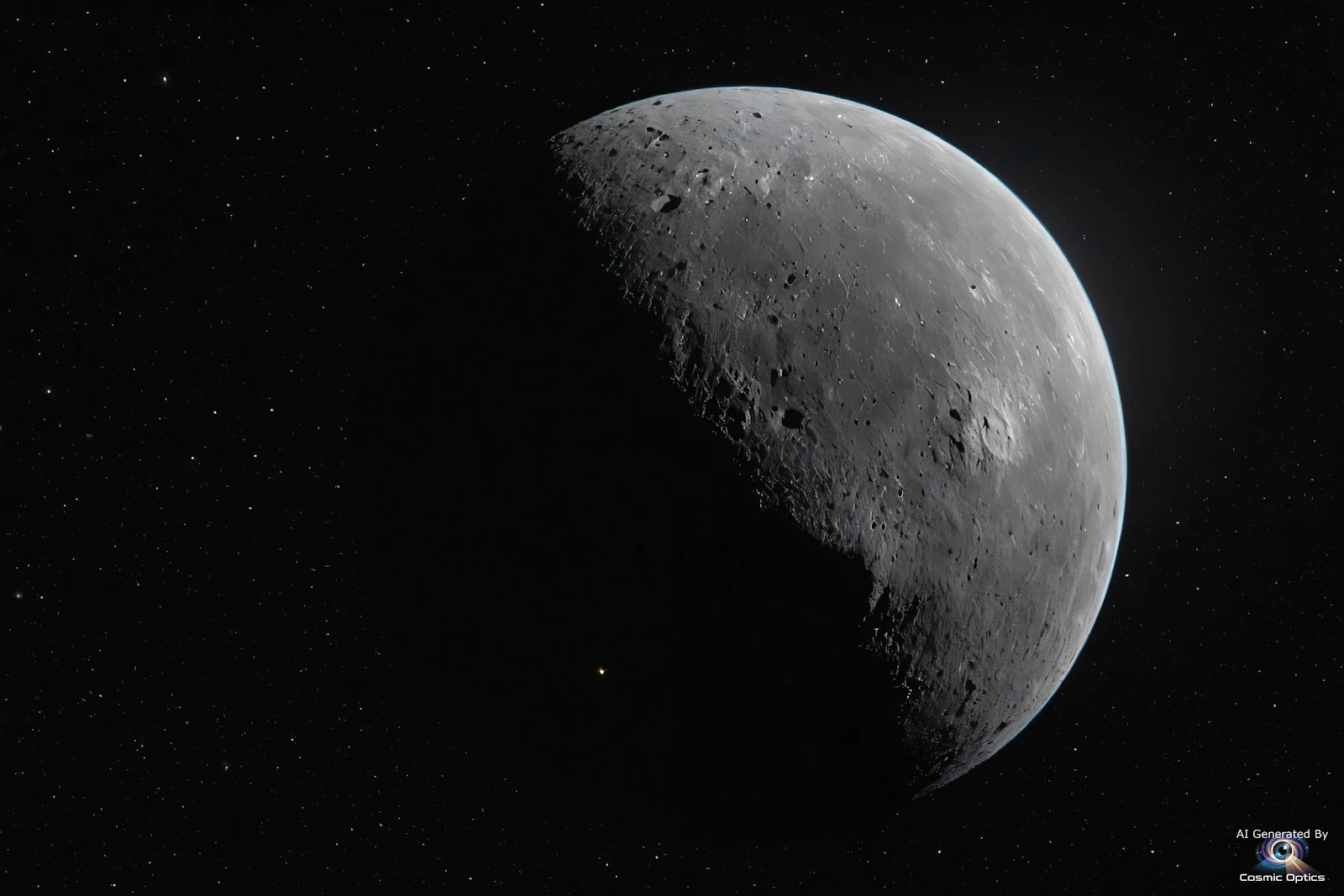
Deep within the frigid, obsidian reaches of our outer solar system lies a world of captivating mystery and profound scientific significance. For decades, our understanding of the planetary neighborhood was fixed—a nine-planet system ending with the distant silhouette of Pluto. However, the dawn of the 21st century brought with it a revelation that would shatter these long-held preconceptions and force a total re-evaluation of what it means to be a planet. The catalyst for this astronomical revolution was Eris, a massive, shimmering dwarf planet that stands as a silent sentinel in the scattered disc, far beyond the traditional boundaries of the Kuiper Belt.
Eris was first detected in January 2005 by a team of researchers at the Palomar Observatory, led by Mike Brown, Chad Trujillo, and David Rabinowitz. Its discovery was not merely another addition to the catalog of celestial objects; it was a bombshell that reverberated through the halls of every scientific institution on Earth. Initially nicknamed "Xena," after the legendary warrior princess, the object’s eventual official naming after the Greek goddess of discord and strife was incredibly apt. The emergence of Eris sparked a period of intense debate within the international astronomical community, ultimately leading to the 2006 International Astronomical Union (IAU) decision that reclassified Pluto and established the new category of "dwarf planets."
What makes Eris truly spectacular is its physical composition and the sheer scale of its isolation. While it is slightly smaller in diameter than Pluto, Eris is significantly more massive—approximately 27% more massive, to be precise. This discrepancy indicates that Eris is a much denser world, likely composed of a higher ratio of silicate rock to water ice. When we observe Eris through the lens of modern spectroscopy, we see a surface coated in a pristine layer of methane ice. This ice is incredibly reflective, giving Eris an albedo of roughly 0.96. To put that into perspective, Eris reflects almost 96% of the sunlight that reaches it, making it one of the most reflective bodies in the entire solar system. Its brightness rivals that of Saturn’s moon Enceladus, appearing almost like a polished mirror drifting in the dark.
The journey Eris takes around the Sun is a marathon of epic proportions, emphasizing the vastness of our cosmic backyard. It takes approximately 557 Earth years to complete a single orbit. Its path is highly eccentric and dramatically inclined at an angle of 44 degrees to the ecliptic plane. While the orbits of the major planets are relatively flat, Eris follows a wild, looping trajectory that takes it far above and below the main plane of the solar system. At its furthest point, known as aphelion, it drifts nearly 97 astronomical units (AU) from the Sun—over three times the distance of Neptune. Even at its closest point, or perihelion, it remains about 38 AU away, still further than the average distance of Pluto.
Orbiting this distant powerhouse is a single known moon, Dysnomia. Named after the daughter of Eris—the spirit of lawlessness—Dysnomia played a crucial role in our understanding of the dwarf planet. By observing Dysnomia’s orbital path, astronomers were able to apply Kepler’s laws of planetary motion to accurately calculate Eris’s mass. Without the gravitational dance between these two bodies, Eris would have remained a much more enigmatic figure, its true weight in the cosmic scales unknown. The presence of Dysnomia suggests that Eris, much like the larger planets, has a complex history of formation, possibly involving a massive impact in the distant past that ejected debris into orbit.
One of the most fascinating aspects of Eris is its atmospheric cycle, which scientists describe as a "collapsing" atmosphere. Because of its extreme orbital distance, Eris experiences profound seasonal changes over centuries. When it moves toward its perihelion, the slight increase in solar warmth causes frozen methane and nitrogen on its surface to sublimate, forming a thin, ethereal atmosphere. However, as it retreats back into the deep cold of the outer reaches, this atmosphere cools, freezes, and literally "snows" back down onto the surface. This constant cycle of renewal is likely why Eris remains so bright; the fresh coat of methane ice continually covers any darkening materials that might accumulate from cosmic radiation.
The study of Eris provides a window into the "scattered disc," a population of icy objects that were gravitationally tossed into wild, distant orbits by the migration of the gas giants billions of years ago. Eris is the largest known member of this group, serving as a pristine time capsule from the early days of the solar system. Its composition tells us about the materials that were present during the era of planetary formation, providing vital clues about how the outer solar system evolved into its current state. By comparing Eris to other dwarf planets like Pluto, Haumea, and Makemake, researchers can begin to piece together the diverse chemistry and history of the objects that linger on the edge of the Sun's influence.
The discovery of Eris did more than just change a list of planets; it redefined our cosmic perspective. It taught us that the solar system does not end in a neat line, but rather fades into a vast, complex frontier filled with hidden worlds. The debate it triggered regarding planetary status forced the world to adopt a more rigorous, scientific definition of what constitutes a "planet," requiring an object to orbit the Sun, possess enough mass to assume a nearly round shape, and—crucially—clear the neighborhood around its orbit. Because Eris resides within the crowded scattered disc, it failed this third criterion, cementing its place as the queen of the dwarf planets.
Eris stands as a testament to the spirit of human discovery. It is a world of extreme cold, brilliant light, and ancient history, waiting for the day when a robotic explorer might finally cross the billions of miles to see its methane-frosted plains up close. Until then, it remains a glimmering point of light in our most powerful telescopes, a reminder that the universe is far more crowded and wondrous than we ever dared to imagine. As we continue to probe the depths of space, Eris serves as a beacon, urging us to keep looking further, questioning our definitions, and marveling at the infinite variety of the cosmos.


