
Pluto: From Planetary Sovereign to Icy Dwarf World Revealed
Far beyond the familiar orbits of the inner rocky planets and the gas giants, an ethereal realm of ice and mystery unfurls across the vast cosmic canvas. It is a place where sunlight is a distant memory, a faint beacon illuminating worlds sculpted by processes unimaginably slow and profound. This is the domain of the outer solar system, a frigid frontier that continues to challenge our understanding of planetary formation and the very definitions we use to classify the celestial bodies orbiting our Sun. Here, at the fringes of our solar neighborhood, resides a remarkable object that has captivated humanity for generations, sparking both scientific debate and a deep emotional connection among star-gazers and scientists alike.
For decades, this distant world held a unique place in our collective imagination, revered as the ninth planet, the ultimate frontier of our solar system. Its discovery in 1930 was a testament to persistent astronomical detective work, initially theorized to explain gravitational perturbations in Neptune’s orbit – though later found to be too small to account for them. For nearly 76 years, it reigned as a planetary sovereign, a cold, enigmatic sphere whose true nature remained largely shrouded in secrecy, a mere point of light even in the most powerful telescopes. Then, in 2006, a seismic shift in our cosmic understanding redefined its status, moving it from a major planet to a dwarf planet, a classification that sparked widespread discussion and, for many, a sense of scientific controversy. This reclassification wasn't an act of demotion, but rather a scientific evolution, driven by new discoveries and a clearer understanding of what constitutes a "planet" in the vast and diverse tapestry of the cosmos.
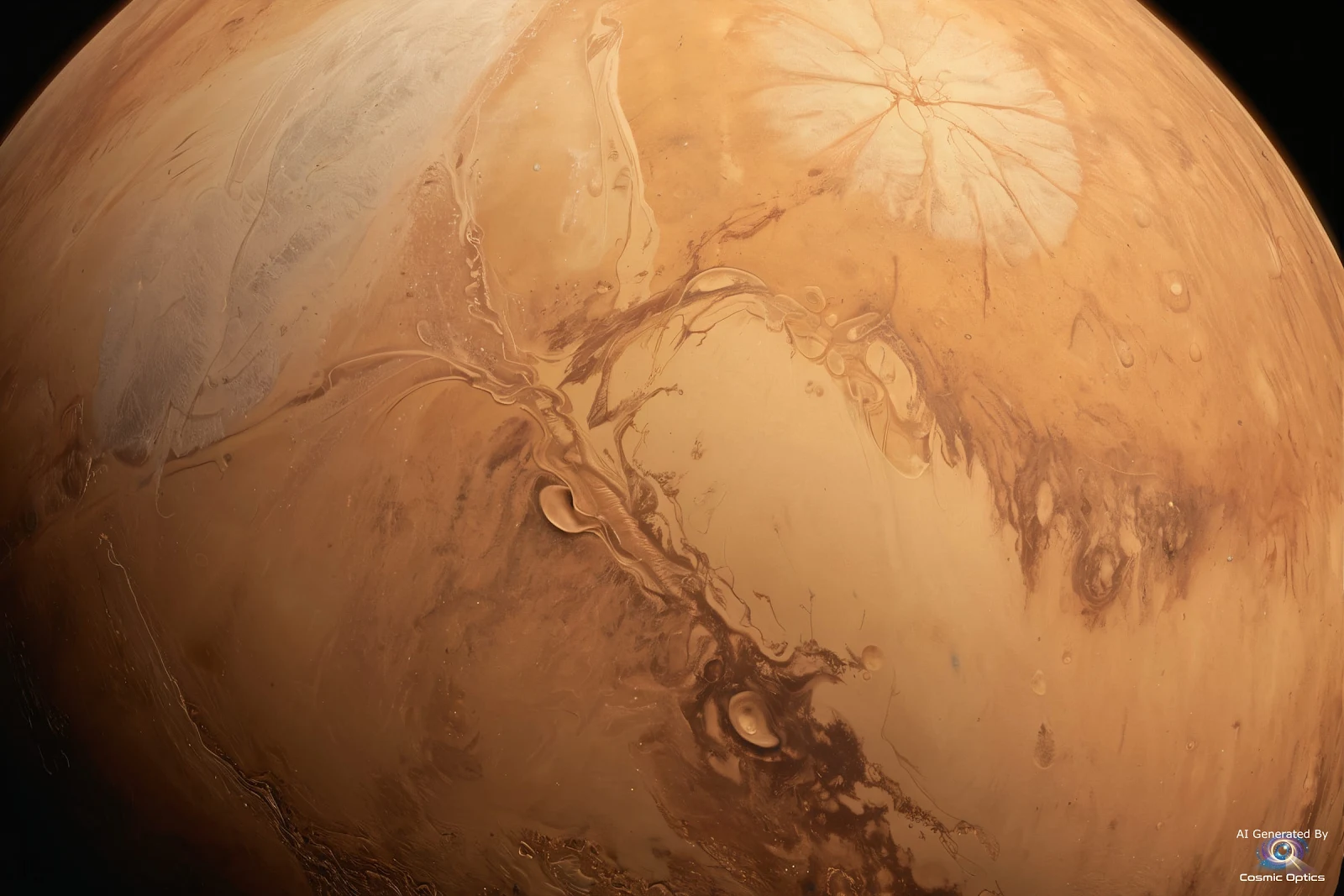
The International Astronomical Union (IAU), the arbiter of celestial nomenclature, established three key criteria for a celestial body to be considered a planet: it must orbit the Sun, have sufficient mass to assume hydrostatic equilibrium (meaning it's nearly round), and have cleared the neighborhood around its orbit. While our distant icy friend met the first two conditions with flying colors, the third proved to be its undoing. This world resides within the Kuiper Belt, a vast disc of icy bodies extending beyond Neptune, a region teeming with countless other objects, many of which are quite substantial. Our cherished outer world simply hasn't gravitationally dominated its orbital zone, a defining characteristic of the eight major planets. Instead, it shares its neighborhood with many similar-sized or even larger icy denizens, making it a prominent member of a different, equally fascinating category: the dwarf planets.
This redefinition, far from diminishing its scientific importance, actually highlighted its significance as a prime example of a new class of objects that populate the outer reaches of our solar system. It belongs to an exclusive club alongside other icy worlds like Eris, Haumea, and Makemake, all denizens of the Kuiper Belt, each with its own unique characteristics waiting to be unveiled. And let's not forget Ceres, the largest object in the asteroid belt, also classified as a dwarf planet, proving that these fascinating bodies can be found much closer to home as well. These dwarf planets offer crucial insights into the early solar system, acting as pristine relics that have largely remained unchanged since their formation billions of years ago. They are the building blocks, the leftover bits and pieces, that didn't quite coalesce into a full-fledged planet, yet harbor a wealth of information about the conditions and processes that shaped our cosmic home.
The true marvels of this distant world, however, were brought into astonishingly sharp focus with the arrival of the New Horizons spacecraft in 2015. After a nine-year, three-billion-mile journey, humanity received its first close-up view of this enigmatic sphere, and the revelations were nothing short of breathtaking. What had once been imagined as a bland, cratered ice ball was revealed to be a dynamic, geologically active world of incredible complexity and beauty. Imagine vast, smooth plains of frozen nitrogen, kilometers deep, flowing like glaciers across its surface. Picture towering mountains of water ice, sharp and craggy, reaching heights comparable to the Rockies on Earth, standing resilient in temperatures nearing absolute zero. Envision a hazy, blue atmosphere, layered and complex, stretching far into space, shedding light on the intricate interplay of light and gases at extreme distances.
One of the most iconic features unveiled by New Horizons is the immense heart-shaped region, Sputnik Planitia, a vast basin of nitrogen ice that constantly resurfaces through convection, erasing impact craters and creating a surprisingly young landscape. Its largest moon, Charon, was also revealed to be a world of stark contrasts, with a deep canyon system dwarfing Earth's Grand Canyon and a mysterious dark polar cap, nicknamed Mordor Macula. The presence of these dynamic features, including cryovolcanoes that might spew icy slush rather than molten rock, suggests an interior that remains surprisingly active, possibly warmed by residual heat or tidal forces, hinting at the potential for liquid water deep beneath its frigid surface – a tantalizing thought, even if such a sub-surface ocean would be dark and utterly alien.
The journey to understand this distant dwarf planet and its Kuiper Belt companions is far from over. The New Horizons mission, after its spectacular encounter, continued deeper into the Kuiper Belt, providing unprecedented data from yet another KBO, Arrokoth. This ongoing exploration is continually reshaping our cosmic narrative, demonstrating that the solar system is a far more diverse and vibrant place than we ever dared to imagine. The scientific debate over planetary definitions, while intense, ultimately serves to deepen our understanding, pushing us to refine our categories and appreciate the astonishing variety of celestial bodies that populate our corner of the Milky Way. Whether called a planet or a dwarf planet, this magnificent world and its icy brethren stand as powerful reminders of the enduring allure of exploration and the endless wonders that await discovery in the cold, silent depths of space. They beckon us to look up, to wonder, and to continue our relentless quest to unravel the universe's most profound secrets.


