Journey with us to the very edge of our solar system, far beyond the familiar orbits of the gas giants, to a realm where sunlight dims to a faint whisper and exotic worlds drift in icy solitude. Here, suspended in the frigid embrace of the Kuiper Belt, lies a celestial body that has captured human imagination like few others: a dwarf planet that, despite its diminutive stature, boasts a history richer and more controversial than many of its larger counterparts. This is a world of breathtaking contrasts, once considered the ninth planet, now a symbol of scientific re-evaluation and the endless wonders awaiting discovery in the cosmos.
The story of this distant world began in 1930 when astronomer Clyde Tombaugh, working at the Lowell Observatory, painstakingly compared photographic plates of the night sky, searching for a hypothesized "Planet X" beyond Neptune. His diligent efforts paid off, revealing a tiny, faint moving object that was immediately hailed as the solar system's newest planet. For decades, it held this prestigious title, becoming a beloved and enigmatic member of our planetary family, inspiring awe and wonder in generations of stargazers and scientists alike. Its discovery expanded the known boundaries of our cosmic neighborhood, beckoning humanity to ponder what other mysteries lay hidden in the vastness beyond.
For many years, this remote world remained largely a mystery, a fuzzy, distant dot even to the most powerful telescopes. We knew it was cold, composed of rock and various ices—nitrogen, methane, and carbon monoxide—and possessed a highly elliptical orbit that occasionally brought it closer to the Sun than Neptune. Its atmosphere, though thin, was understood to undergo dramatic changes, expanding when closer to the Sun and partially freezing out onto its surface when farther away. This dynamic interplay between its icy surface and tenuous atmosphere hinted at a surprisingly active world, even in the depths of space.
Further observations revealed a complex system, not merely a lone wanderer. Its largest moon, Charon, is so substantial that the two bodies often orbit a common center of gravity situated outside the main body itself, creating what is sometimes referred to as a binary dwarf planet system. This extraordinary celestial dance between Charon and its primary companion is a spectacle in itself, hinting at a dramatic formation history. Beyond Charon, a retinue of smaller moons—Styx, Nix, Kerberos, and Hydra—were later discovered, each adding another layer of complexity to this fascinating mini-system, reminding us that even the most distant corners of our solar system hold intricate wonders.
Then came the paradigm shift of 2006. The International Astronomical Union (IAU), faced with the discovery of numerous other large, icy objects in the Kuiper Belt—some even comparable in size—convened to formally define what it means to be a "planet." The new criteria stipulated three conditions: a celestial body must orbit the Sun, be massive enough for its own gravity to pull it into a nearly round shape (achieving hydrostatic equilibrium), and have "cleared the neighborhood" around its orbit. While our distant world met the first two criteria with flying colors, it crucially failed the third. Its location within the crowded Kuiper Belt meant it shared its orbital path with countless other icy bodies, thus it had not gravitationally dominated and cleared its orbital zone.
The decision was met with a whirlwind of passionate debate and controversy, both within the scientific community and among the public. For many, the reclassification from "planet" to "dwarf planet" felt like a demotion, a stripping of identity from a beloved member of our cosmic family. Yet, this scientific re-evaluation was a testament to the dynamic nature of discovery, a recognition that as our knowledge expands, so too must our definitions. It forced astronomers to refine their understanding of planetary formation and the diverse array of objects inhabiting our solar system, enriching our comprehension rather than diminishing it.
The most transformative chapter in this world's story, however, unfolded in 2015 with the arrival of NASA's New Horizons spacecraft. After a nine-and-a-half-year journey spanning billions of kilometers, New Horizons performed a spectacular flyby, offering humanity its first-ever close-up views of this enigmatic world and its moons. The data beamed back across the vast expanse of space was nothing short of revolutionary, obliterating preconceived notions and unveiling a body far more complex and geologically active than anyone had imagined.
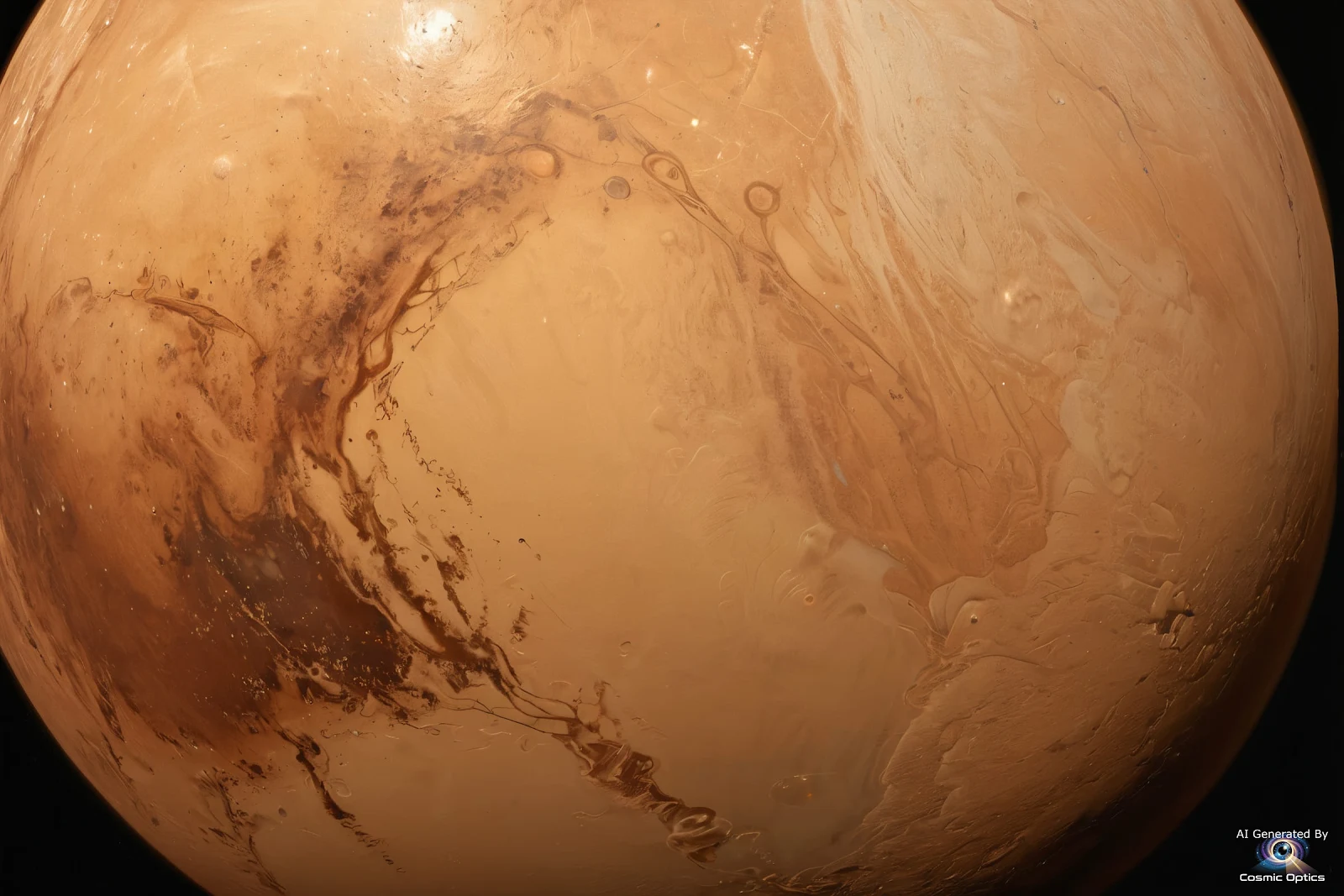
The images revealed a stunningly diverse and surprisingly youthful surface, marked by vast plains of nitrogen ice, towering water-ice mountains as high as the Rockies, and evidence of cryovolcanism—ice volcanoes that erupt volatiles like water, ammonia, or methane instead of molten rock. The famous heart-shaped region, informally named Tombaugh Regio, revealed a smooth, craterless plain called Sputnik Planitia, suggesting ongoing geological processes that continually resurface the area. This was not the inert, frozen relic scientists had expected, but a vibrant, living world, demonstrating that even at the solar system's frosty fringes, internal heat and geological activity could persist for eons.
This distant world, and its Kuiper Belt companions, serve as invaluable cosmic time capsules. Located far from the Sun's intense heat, these objects have largely preserved the primordial materials from which our solar system formed over 4.5 billion years ago. Studying them allows scientists to peer back into the conditions of the early solar nebula, gaining critical insights into the processes that led to the formation of Earth and its planetary siblings. Every bit of data from New Horizons deepens our understanding of planetary evolution and the rich diversity of worlds that populate the universe.
Regardless of its official classification, the enduring legacy of this captivating world is undeniable. It remains a powerful symbol of human curiosity, scientific exploration, and the relentless pursuit of knowledge. Its journey from a blurry telescopic image to a vividly rendered, geologically complex world seen through the eyes of a robotic explorer is a magnificent testament to our species' innate drive to understand our place in the cosmos. It teaches us that the universe is always ready to surprise us, to challenge our assumptions, and to reward our persistence with wonders beyond imagination.