
Pluto Unveiled: Complex and Dynamic Worlds of the Icy Outer Solar System
In the vast, inky canvas of our solar system, beyond the familiar orbits of the gas giants, lies a realm of icy mystery and profound beauty. It is a place where sunlight is a distant memory, a faint caress from a star that appears as little more than a brilliant pinprick in the eternal twilight. Yet, even in these extreme conditions, magnificent worlds thrive, challenging our perceptions and expanding the very definition of what a planet can be. The universe, it seems, delights in surprising us, revealing wonders far grander than our most imaginative dreams.
For decades, our understanding of these far-flung outposts was largely theoretical, based on distant observations that offered tantalizing glimpses but few concrete answers. Then, a remarkable achievement of human ingenuity changed everything. An intrepid robotic explorer, launched with the audacity of a dream, embarked on a journey spanning billions of kilometers and nearly a decade, hurtling towards one of the most enigmatic residents of our solar system’s distant frontier. Its mission: to peel back the veil of mystery and reveal a world unseen, a cosmic marvel awaiting its close-up.
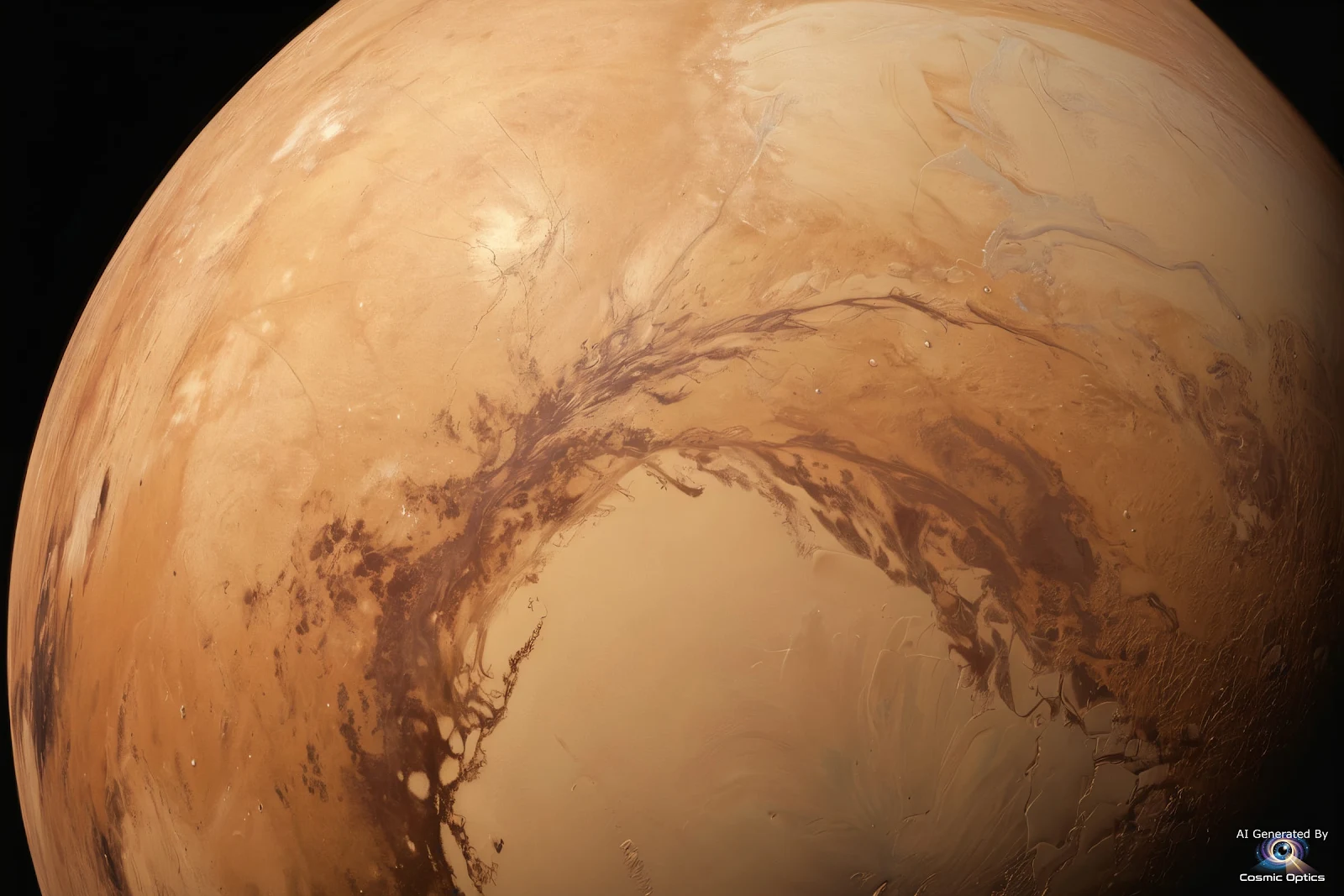
An accurate, photorealistic astronomical photograph of the dwarf planet Pluto in deep space. The sur_00029
What it unveiled was nothing short of astonishing. The images beamed back across the cosmic void painted a portrait of a dynamically active body, far from the static, cratered ice ball many had envisioned. Instead, we were introduced to a breathtaking landscape of towering, jagged water-ice mountains, some reaching heights comparable to the Rockies, carved with an intensity that speaks of geological forces still at play. Adjacent to these majestic peaks stretched vast, smooth plains of nitrogen ice, forming an expansive, heart-shaped region that captivated the world. This enormous icy basin, known as Sputnik Planitia, is believed to be a giant impact feature that has since been filled and reshaped by convection within the nitrogen ice, constantly resurfacing itself and erasing older craters. It’s a vivid testament to a surprisingly warm interior, a world that refuses to freeze solid despite its frigid surroundings.
The surprises didn't end there. Our distant voyager detected a complex, multi-layered haze in this world’s tenuous atmosphere, a stunning spectacle glowing blue in the dim sunlight – a stark contrast to Earth’s clear skies. Evidence of cryovolcanism, where icy slush erupts instead of molten rock, suggested ongoing geological activity powered by an internal ocean. And its largest moon, Charon, was revealed to be a dramatic counterpart, featuring an immense chasm so deep and wide it dwarfs Earth’s Grand Canyon, spanning the entire breadth of the moon’s northern hemisphere. This binary dance, with two worlds locked in an intimate gravitational embrace, each profoundly influencing the other, underscores the incredible diversity even within our understanding of "moons."
This wealth of detail utterly transformed our perception of the outer solar system. It demonstrated conclusively that worlds far from the Sun can harbor complex geology, atmospheres, and even the potential for internal liquid water – conditions previously thought exclusive to planets much closer to stellar warmth. Such discoveries provoke profound questions about the prevalence of life and the conditions under which it might arise in the universe. If such dynamic activity can exist so far from the Sun, what other secrets might the countless other icy bodies of the Kuiper Belt hold?
Of course, this celestial body is well-known for its fascinating journey through our scientific nomenclature. Once celebrated as the ninth planet, it was reclassified in 2006 by the International Astronomical Union (IAU) as a "dwarf planet." This decision, while initially controversial and deeply felt by many who had grown up with the traditional planetary lineup, was a crucial step in refining our understanding of planetary systems. The IAU established three criteria for a celestial body to be considered a "planet": it must orbit the Sun, be massive enough for its own gravity to pull it into a nearly round shape, and have cleared the neighborhood around its orbit. While our subject fulfills the first two criteria, it fails the third, sharing its orbital path with a multitude of other icy bodies in the Kuiper Belt. This redefinition wasn't a demotion, but rather a more accurate categorization that allowed for a clearer understanding of the vast population of trans-Neptunian objects and the architecture of our solar system.
Indeed, this reclassification opened the door to a new and exciting category of celestial objects – the dwarf planets. Ceres, located in the asteroid belt between Mars and Jupiter, was the first to be classified, a small but mighty ocean world of significant scientific interest. Farther out, alongside our familiar subject, we find other compelling dwarf planets like Eris, which is even more massive; Haumea, a rapidly rotating, ellipsoidal world; and Makemake, another icy denizen of the Kuiper Belt. Each of these worlds possesses unique characteristics, from Haumea’s peculiar shape and rings to Ceres’s mysterious bright spots. Their study is continuously reshaping our understanding of planetary formation and evolution, showcasing that "dwarf" does not equate to "insignificant" in the cosmic ballet.
These icy behemoths are members of the Kuiper Belt, a vast ring of cold, dark, and primordial objects extending far beyond Neptune's orbit. This region is a veritable treasure trove, a fossilized record of the early solar system, holding billions of comets and countless larger bodies, some of which are likely yet-undiscovered dwarf planets. Studying these objects provides invaluable clues about the raw materials from which our planets formed and the chaotic processes that shaped them billions of years ago. It's a cosmic deep freeze, preserving relics from the dawn of our star system, offering a window into its tumultuous youth.
The exploration of these distant, icy worlds marks not an end, but a vibrant beginning. The success of missions like New Horizons has ignited a fervent desire for further expeditions into the Kuiper Belt and beyond. Each close encounter, each new photograph, each data point, fuels our insatiable curiosity and pushes the boundaries of human knowledge. The quest for "Planet Nine," a hypothetical super-Earth believed to lurk even further out, continues to drive observational astronomy, reminding us that even within our own solar system, monumental discoveries still await. The universe is a boundless library, and we are only just beginning to turn its outermost pages.
So, as we gaze upon the detailed imagery returned from the edge of our solar system, let us marvel not only at the scientific triumph it represents, but also at the sheer resilience and diversity of celestial bodies. This distant, dynamic world, once a blurred point of light, now stands revealed in all its complex glory, a testament to the universe's infinite capacity for surprise. It reminds us that even the smallest, most distant worlds can hold secrets of immense significance, encouraging us to continue our tireless exploration of the cosmos, one breathtaking discovery at a time.


