
The Red Planet Revealed: Exploring the History and Future of Our Closest Celestial Neighbor
The crimson allure of the fourth planet from the sun has captivated the human imagination since the first ancient astronomers tracked its retrograde loop across the starlit sky. Often referred to as the Red Planet, this terrestrial neighbor is more than just a dusty orb of iron oxide; it is a complex, dynamic world that holds the keys to understanding the evolution of our solar system. As we stand on the precipice of becoming a multi-planetary species, the study of this celestial body has transitioned from speculative fiction to a rigorous, multidisciplinary scientific endeavor that challenges our understanding of biology, geology, and physics.
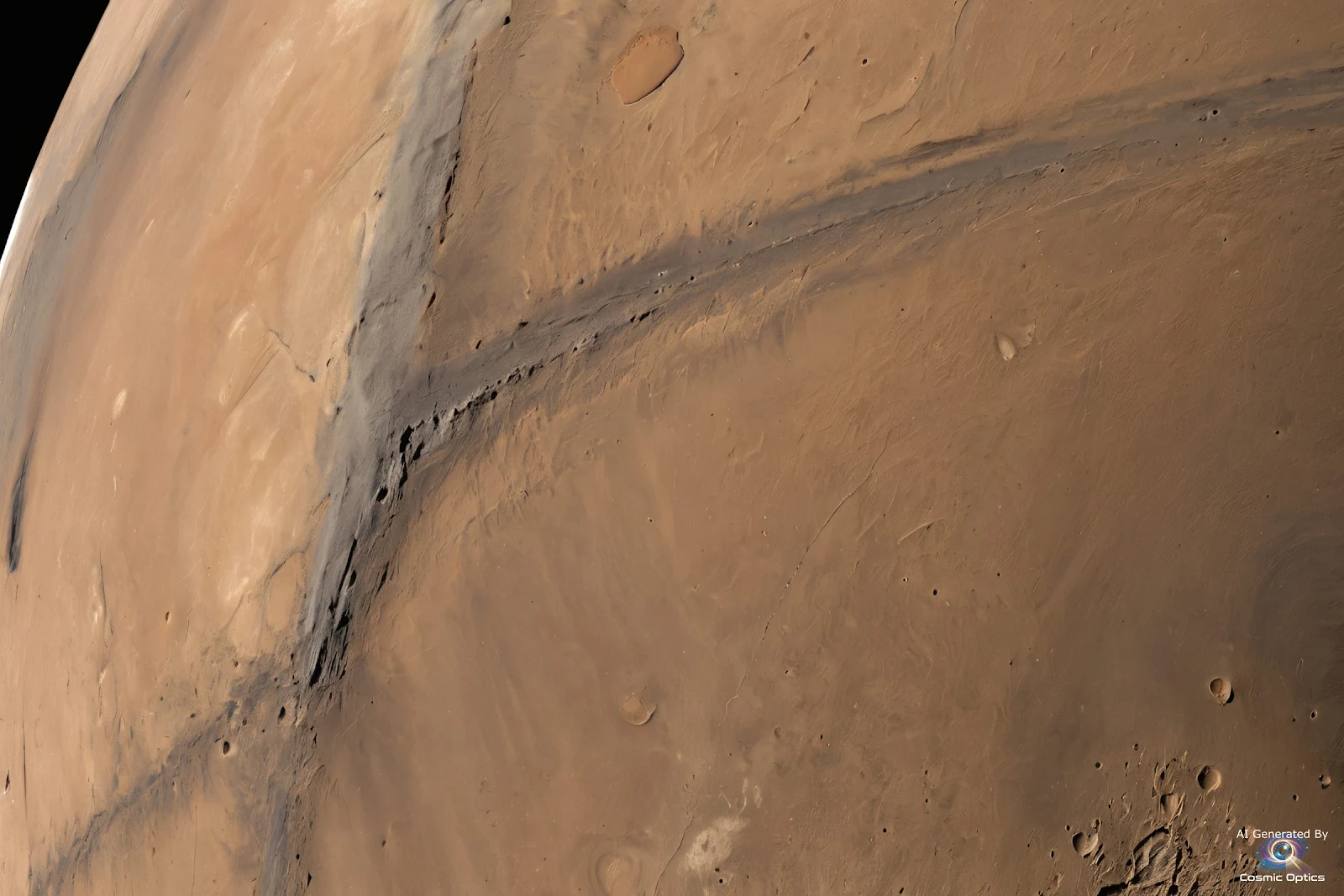
An authentic, photorealistic astronomical photograph of the planet Mars in deep space. A highly deta_00032
One of the most striking aspects of this world is its sheer geological diversity. Despite having only about half the diameter of Earth, it boasts features that dwarf the most impressive terrestrial landmarks. Olympus Mons, the largest volcano in the solar system, stands nearly three times the height of Mount Everest. Its massive scale is a direct result of the planet's lack of tectonic plate movement. Unlike Earth, where plates shift over volcanic hotspots to create chains of islands or mountains, the Martian crust remained stationary, allowing a single vent to pour out lava for billions of years, building a mountain the size of the state of Arizona. This geological stability provides us with a pristine record of the planet's internal history, a luxury we do not have on our own geologically hyperactive Earth.
Complementing the vertical majesty of its volcanoes is the horizontal vastness of the Valles Marineris. This canyon system stretches over 4,000 kilometers long, reaching depths of up to 7 kilometers. If placed on Earth, it would span the entire width of the United States. While the Grand Canyon was carved primarily by water, the Valles Marineris is thought to be a tectonic "crack" in the crust, widened by erosion and the collapse of the surrounding terrain. Exploring these depths offers a cross-sectional view of the planet’s history, revealing layers of sedimentary rock that may have been deposited during a time when the surface was far more hospitable than it is today.
The search for water has long been the primary objective of robotic exploration. We now have irrefutable evidence that this world was once "blue." Ancient riverbeds, alluvial fans, and the chemical signatures of minerals that only form in the presence of liquid water suggest a past where the atmosphere was thick enough to support a hydrological cycle. Today, water exists primarily in the form of ice at the polar caps and in subsurface reservoirs. The discovery of recurring slope lineae—dark streaks that appear on crater walls during warm seasons—continues to be a subject of intense debate among planetary scientists, potentially hinting at transient, briny liquid water flowing on the surface even now.
Atmospheric science is another critical frontier in our understanding of this world. The atmosphere is currently thin, composed of 95% carbon dioxide, and provides little protection from solar radiation or temperature extremes. However, isotopic analysis suggests that the planet once possessed a much thicker atmosphere and a global magnetic field. The loss of this magnetic shield allowed solar winds to strip away the gases over billions of years, transforming a potentially habitable world into a frozen desert. Understanding this process is vital not only for our history of the solar system but also for understanding the long-term atmospheric stability of exoplanets found orbiting distant stars.
The technological achievements required to study this planet are nothing short of miraculous. From the early flybys of the Mariner missions to the sophisticated laboratories of the Curiosity and Perseverance rovers, our "eyes" on the ground have evolved significantly. These machines are capable of vaporizing rocks with lasers to determine their chemical composition and drilling into the surface to look for organic molecules. The Perseverance rover is currently collecting samples that will eventually be returned to Earth, a feat that would mark the first time we have physically brought material from another planet back to our laboratories for analysis.
Looking toward the future, the prospect of human exploration looms large. This mission presents the greatest logistical challenge in human history, requiring breakthroughs in propulsion, life support, and radiation shielding. A journey to this world takes between six and nine months, during which astronauts will be exposed to high levels of cosmic rays. Once there, they must contend with a gravity that is only 38% of Earth's and a day—known as a "sol"—that is roughly 40 minutes longer than our own. These factors will necessitate a complete reimagining of human biology and psychology in a confined, alien environment.
The ultimate question that drives this exploration is whether life ever existed beyond the Earth. If we find evidence of ancient microbial life in the Martian soil, it would suggest that the spark of life is a common occurrence in the universe. If we find nothing, it may imply that the conditions required for life are rarer and more precious than we ever imagined. Regardless of the outcome, the pursuit itself enriches our knowledge, pushes the boundaries of our technology, and fulfills the innate human desire to explore the unknown. This world remains a beckoning frontier, a laboratory for the future of humanity, and a testament to the wonders of our celestial neighborhood.


